
Starting a Pocket Watch Collection as a Milestone Gift
How to Start a Pocket Watch Collection the Right Way
Why pocket watches are worth collecting

A pocket watch is one of the few collectible objects that still does its original job. You can hang a vintage poster or shelve a first-edition book, but a pocket watch from 1910 can still be wound, carried, and read at a glance — the mechanism inside hasn’t changed its purpose in over a century. That combination of history and function is a large part of why the hobby keeps attracting new collectors in Australia, from retirees rediscovering a grandfather’s timepiece to grooms hunting for something with more weight than a rented tie.
Unlike stamps or coins, pocket watches don’t ask you to become an expert before you can enjoy them. A beginner can pick up a piece, feel the heft of the case, and immediately understand why someone in 1925 chose it. That immediacy is rare in collecting, and it means you can build a satisfying set of watches long before you can identify a movement calibre from memory.
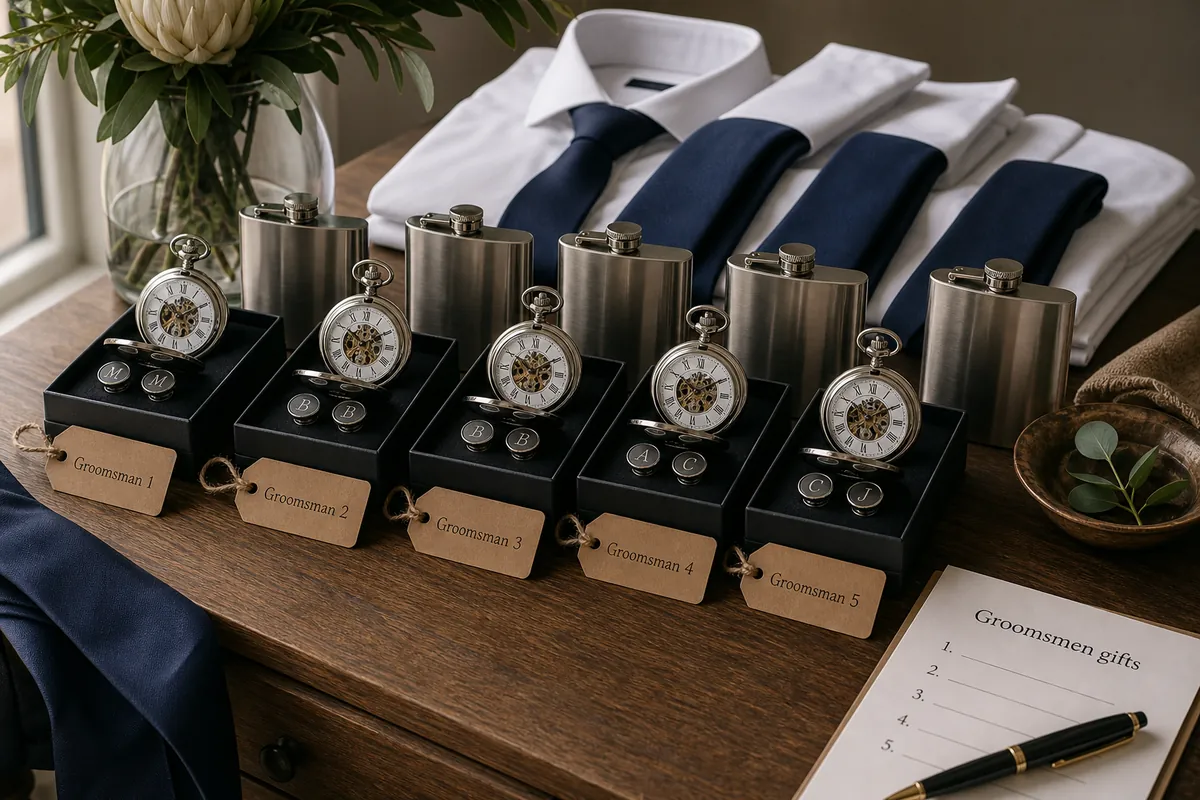
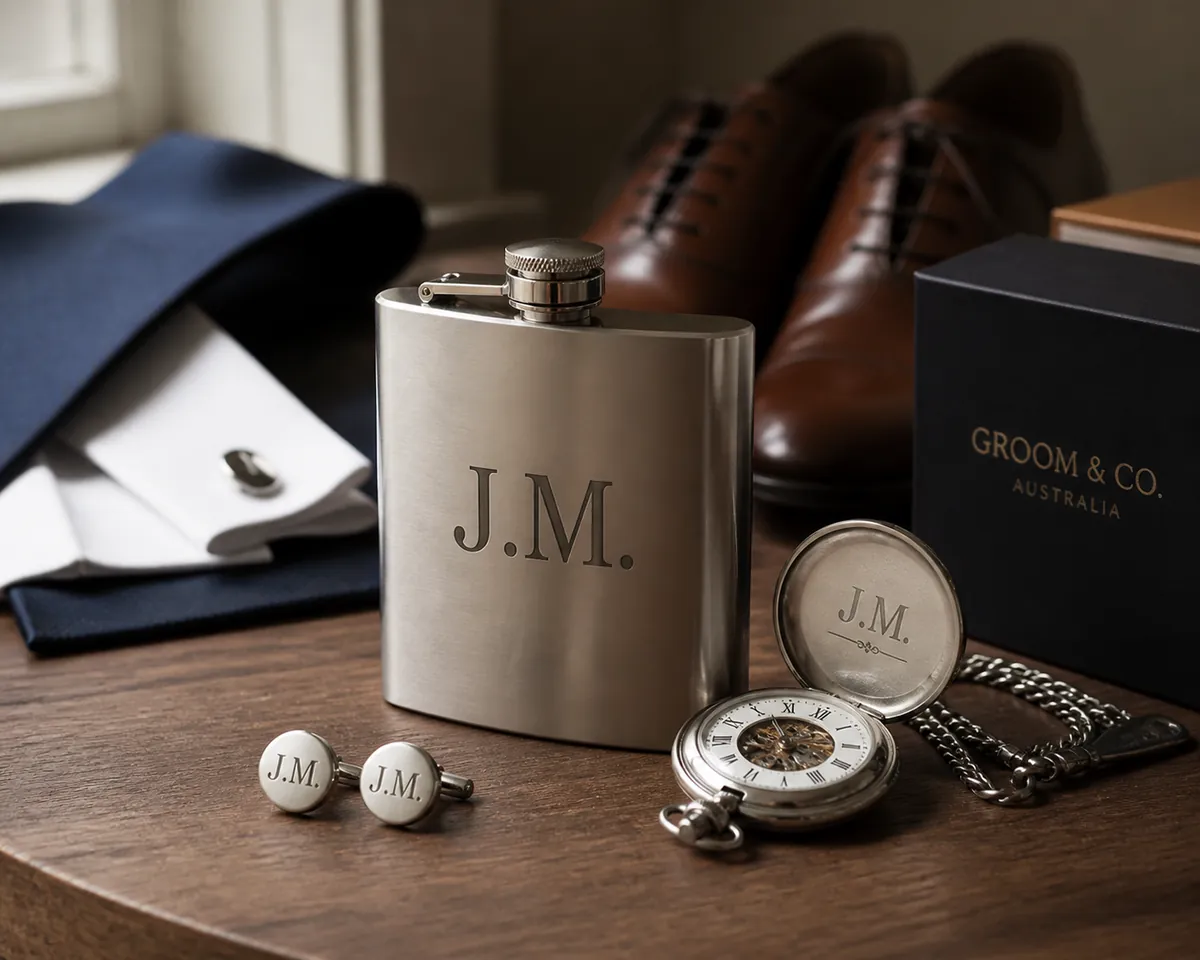
There’s also a practical, gift-shaped side to this hobby that’s easy to overlook. A pocket watch sits comfortably next to a leather wallet, a hip flask, or a set of cufflinks as a present with genuine staying power — the kind a best man might hand over the night before a wedding, or a father might pass to a son on the morning of the ceremony. If you’re weighing up a first purchase with that angle in mind, it’s worth spending time on the Groom & Co homepage before you commit to anything, just to get a feel for how presentation-ready pieces are typically styled.
Collecting writers have made similar observations about accessories more broadly — that objects chosen with restraint tend to age better than anything bought purely to impress. Both GQ and the Smithsonian Magazine archive on timepieces cover this idea from different angles — one from a style perspective, one from a historical-object perspective — and they land in roughly the same place.
Setting direction before you buy
The single biggest difference between a collection that feels coherent five years in and one that feels like a junk drawer is whether the owner picked a direction early. That doesn’t mean locking yourself into rigid rules on day one — it means having a rough answer to a simple question: what is this collection actually for?
Some people collect by maker, chasing a particular brand’s output across decades. Others collect by material, sticking to solid silver or gold-filled cases because they like how those age. A growing number collect by occasion — building a small rotation of watches specifically meant to be worn or gifted at weddings, anniversaries, and similar milestones. None of these is more “correct” than another; the point is picking one so your purchases start reinforcing each other instead of pulling in five directions.
Budget discipline matters here too, and it has nothing to do with how much money you have. It’s about knowing, before you look at a single listing, whether you’re after a display piece that never needs to run, a working watch you’ll actually carry, or something in between. That one decision filters out most of the pieces that would otherwise tempt you for the wrong reasons.
Vocabulary is worth picking up early as well — case finish, dial type, movement, fob and chain style are terms you’ll see constantly, and knowing them stops you from relying entirely on a seller’s description. The pocket watch range is a reasonable place to see these terms used in context, and the blog covers a lot of the same ground from a buying-a-gift angle if that’s closer to your reason for starting.
For a broader view of how collectors talk about focus and restraint, Esquire has covered the case for buying fewer, better accessories rather than chasing volume — advice that applies just as well to watches as it does to the rest of a wardrobe.
Reading condition like a collector
Once you’ve got a direction, condition is where most beginner mistakes happen. It’s easy to be swayed by a dramatic case or an unusual dial and miss the details that actually determine whether a watch is worth the asking price.
Start with the case. Look for dents rather than surface scratches — light scratching is completely normal on anything a century old, but dents and repairs usually mean the watch has been dropped or mishandled at some point. Check where the bezel meets the crystal; a poor fit there often means the crystal has been replaced with something that doesn’t quite match the original case.
The dial tells you almost as much as the movement. Hairline cracks, water spotting, and refinishing are all common on older pieces, and none of them are automatically dealbreakers — but they should affect what you’re willing to pay. A collector chasing originality will avoid a redone dial even if it looks cleaner than an aged original; a collector who just wants something legible and attractive might not mind at all. Decide which camp you’re in before you start comparing prices.
If the watch is meant to run, ask whether it’s been serviced recently and whether the seller can demonstrate it keeping time, even briefly. A watch that “just needs a clean” can sometimes mean a straightforward service, or it can mean a movement that’s been sitting dry for thirty years. Assume the more expensive outcome unless you’re told otherwise, and factor a service cost into your budget rather than treating it as a nice-to-have.
Case material affects both look and value — silver and gold cases wear differently to nickel or gold-filled ones, and each has its own following. None of this needs to be memorised before your first purchase, but it’s worth reading through a few examples side by side. The watch box and accessories range and the blog are both useful for that kind of comparison, and the about page gives a quick sense of how a smaller Australian retailer thinks about presentation-grade pieces versus purely decorative ones.
The National Association of Watch and Clock Collectors publishes detailed condition-grading guidance that’s worth a read once you’re ready to go beyond the basics — it’s aimed at serious collectors but is written clearly enough for a beginner to follow.
Choosing an era that suits you
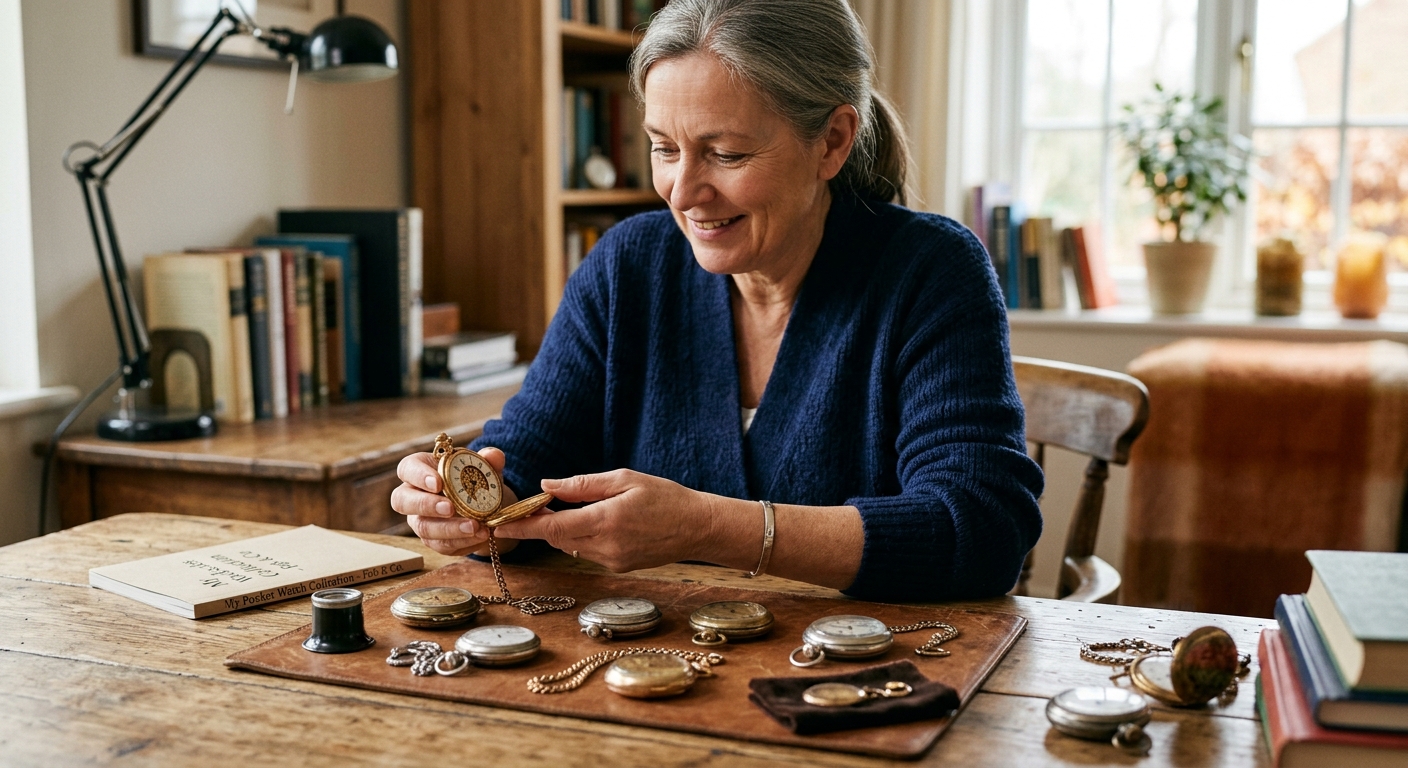
Every era of pocket watch production has its own personality, and figuring out which one you’re drawn to will save you a lot of wasted browsing. Victorian and Edwardian pieces tend to be the most decorative — engraved cases, elaborate numerals, sometimes hunter-case covers that snap shut over the dial. Watches from the early twentieth century usually simplify that look, trading ornamentation for cleaner lines and a slightly more practical footprint. Later pieces, closer to mid-century, often lean fully functional, with plain cases built for durability rather than display.
None of these eras is objectively better to collect — the mistake beginners make is assuming the oldest or most ornate example is automatically the most desirable. In practice, plenty of experienced collectors gravitate toward the plainer mid-century pieces precisely because they’re easier to wear without feeling like a costume prop.
Chain and fob choice matters more than people expect. A watch with a mismatched or missing chain can look unfinished even if the watch itself is excellent, while a well-matched chain or simple fob makes the whole piece feel considered. If you like the idea of actually wearing what you collect — say, as part of a groom’s outfit or a best man’s waistcoat — this detail is worth as much attention as the watch face itself.
It’s also worth deciding early whether your collection is meant to be worn or simply displayed. A display-only approach opens up far more options, since running condition becomes irrelevant. A wearable approach narrows the field but tends to produce a collection you interact with more often, which for a lot of people is the whole point of collecting in the first place.
To compare pieces across different eras and finishes, the pocket watch range groups options in a way that makes this easier, and the homepage is a reasonable starting point if you’d rather browse broadly before narrowing down. Harper’s Bazaar has also covered how different watch eras read in modern styling, which is a useful reference point if presentation matters to you as much as mechanics.
Housing, handling and everyday care

A collection is only as good as the care behind it, and pocket watches are more forgiving than people assume — provided you get the basics right. None of this requires specialist tools or a workshop; it mostly comes down to consistency.
Storage is the first line of defence. A lined box, a soft pouch, or even a dedicated drawer with some padding will do far more good than an expensive display case used carelessly. The goal is to keep watches away from unnecessary knocks, dust, and direct sunlight, which can fade dials over time.
Cleaning should stay gentle and infrequent. A soft, dry cloth is usually all a case and chain need. The dial and any internal parts are a different matter — if you’re not confident about opening a case back, don’t. That’s a job for a watchmaker, not a weekend project, and attempting it yourself is one of the more common ways beginners damage an otherwise fine watch.
If a watch runs, understand its winding needs before you rely on it daily. Some movements are more tolerant of irregular winding than others, and a watch that’s been sitting unused for years should generally go to a watchmaker for a check before you start winding it regularly again. Skipping this step is how a “barely used” watch turns into an expensive repair bill.
Humidity and temperature swings are harder on watches than most people expect — a damp shed or an un-air-conditioned cupboard will do more long-term damage than the occasional bump. If any piece in your collection carries family history or was given for a specific occasion, that sentimental weight is a good reason to be a little more careful than you might be with a purely decorative purchase.
For presentation-friendly storage options and pieces built with everyday wear in mind, the blog and the watch box and accessories range are worth checking, and the about page explains a little about how the range is put together.
Smart habits for a first-time buyer
The strongest habit any new collector can build is patience. Buying one considered piece a month will almost always produce a better collection after a year than buying five pieces in a weekend of enthusiasm. Slower buying gives you time to notice patterns in what you actually like, rather than what looked exciting in the moment.
Trust the seller as much as the watch. Clear photographs from multiple angles, an honest account of any repairs or replaced parts, and a willingness to answer detailed questions are all good signs — whether you’re buying from an online store, a market stall, or a dealer. Vague descriptions and reluctance to discuss condition are worth treating as a warning, not a challenge to figure out.
Don’t assume your first purchase needs to be impressive. A modest, honestly-described watch that teaches you something about case material or dial condition is worth more, long-term, than an expensive piece bought before you knew what you were looking for. Plenty of serious collectors point to an inexpensive early purchase as the one that actually taught them how to shop well later on.
Finally, know what you’re not looking for as clearly as what you are. If originality matters to you, don’t get talked into a heavily restored dial because the price is good. If you want something you’ll actually wear, don’t fall for a beautiful display piece that will never leave a drawer. That clarity does more to protect your budget than any amount of research into brands or eras.
When you’re ready to compare finished, gift-ready options, the pocket watch range and homepage are the fastest way to see the current range, and the blog is worth a look if you want more context before deciding. GQ has also written on why restraint tends to beat impulse when buying classic accessories — a point that applies just as well here.
FAQ
What’s the first thing I should decide before buying?
Decide whether the watch is meant to be worn, displayed, or given as a gift. That single decision shapes almost every other choice, from case material to whether the movement needs to run.
How much should a beginner spend on a first pocket watch?
There’s no fixed figure — the smarter approach is starting modestly so you learn what you actually like before spending on rarer or more expensive pieces.
Do I need a running movement to start collecting?
No. Plenty of collectors focus on display pieces where cosmetic condition matters far more than whether the mechanism runs. It comes down to whether you want to wear or simply own the watch.
Is it better to chase rare pieces early on?
Generally no. Beginners are better served buying pieces they genuinely like and understand, and saving rarer finds for once they’ve developed a clearer sense of their own taste.