
Pocket Watch Chains for Grooms: A Suit Styling Guide
Pocket Watch Chains for Grooms
Why the Chain Isn’t an Afterthought
Ask someone shopping for their first pocket watch what they spent the most time deciding on, and they’ll usually say the dial, the case metal, or whether they wanted a mechanical movement over a quartz one. Almost nobody mentions the chain, because it typically arrives bundled with the watch and gets treated as a footnote. That’s a mistake, because the chain is the part that’s actually visible for most of the day. The watch itself sits tucked inside a pocket; the chain is what’s draped across a waistcoat or clipped to a belt loop where everyone can see it.
There’s a functional reason to care too, not just an aesthetic one. A pocket watch without a properly fitted chain is one stumble away from a cracked crystal on a tile floor. The T-bar, swivel hook, or lobster clasp is the anchor point, and if it’s mismatched to the length or the fabric it’s attached to, you end up either yanking the watch free every time you check it or watching it swing loosely and clatter against buttons and belt buckles.
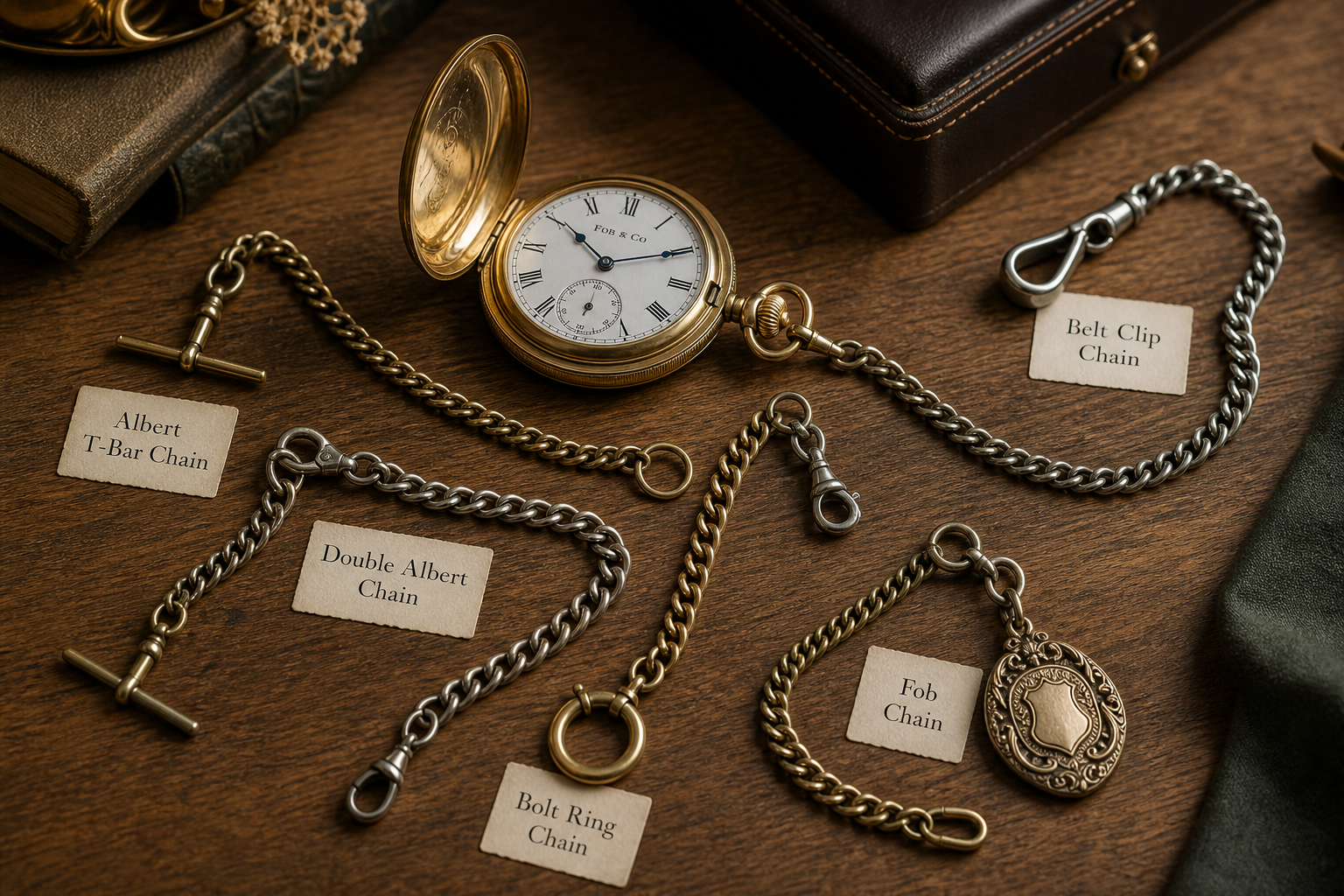
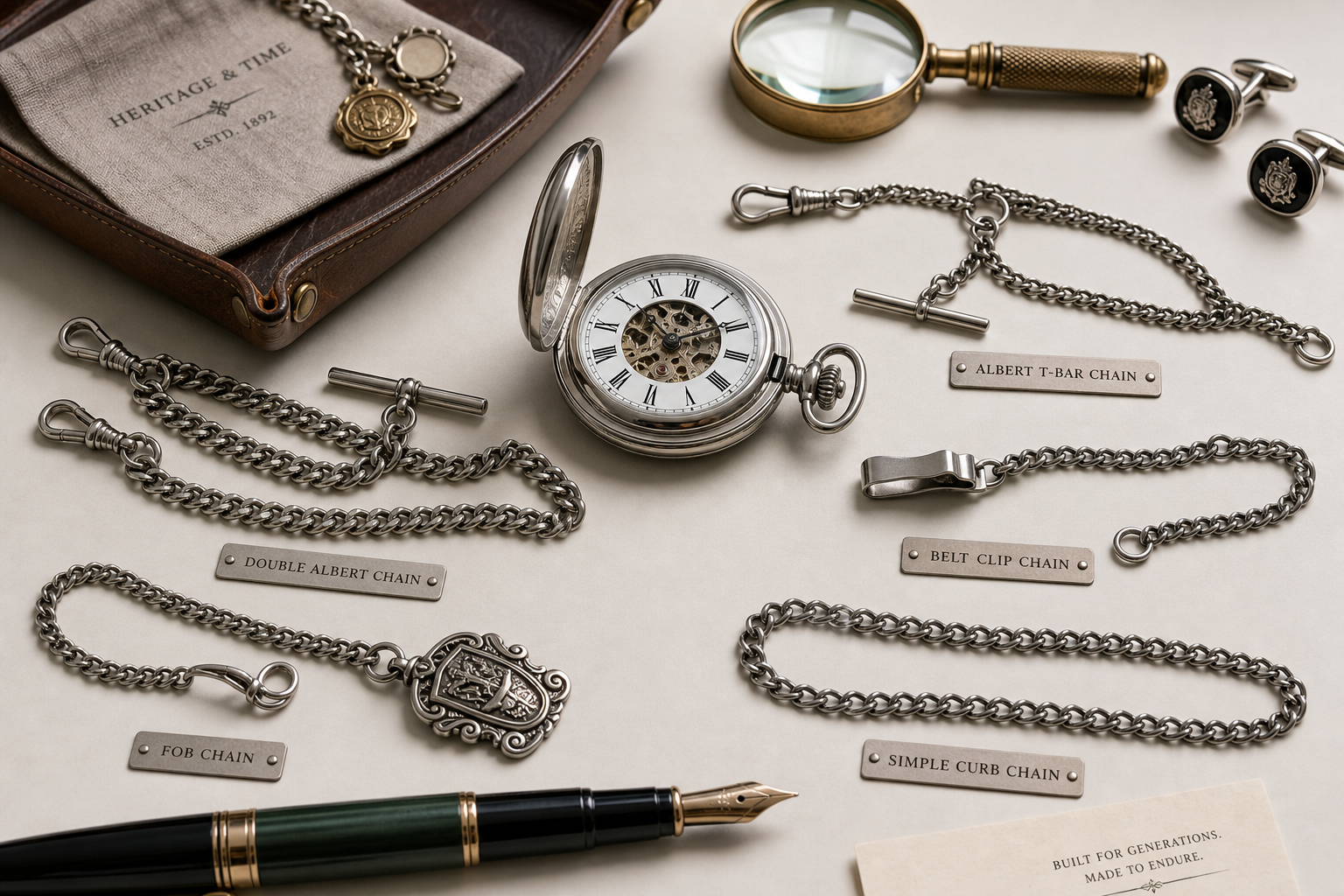
Nearly everything you’ll come across boils down to three families: the single Albert, the Double Albert, and the plain fob chain. They’re not interchangeable — each was built to solve a slightly different problem — and understanding which one solves your problem is the whole point of reading this.
Matching a Chain to How You’ll Wear It
The first question isn’t “which chain looks best” — it’s “where is this thing actually going to attach.” If you own a waistcoat and plan on wearing it, a single Albert threaded through the centre buttonhole, watch tucked in one pocket and the T-bar sitting visibly on the outside, is the traditional arrangement, and it’s stuck around since Victorian times because it simply works. No waistcoat in your wardrobe? A shorter fob chain clipped to a belt loop or trouser pocket achieves the same result with a lot less visual noise.
Case style matters just as much as where you’re clipping the chain. A full hunter pocket watch, with its hinged metal cover snapping shut over the dial, already reads as formal and a little ceremonial, so it tends to carry a heavier Double Albert or a substantial curb-link chain without looking overdone. A half hunter, which shows the time through a small glazed cutout in its cover, sits comfortably with something mid-weight. Open-face designs, including the classique range, generally look sharper with a slimmer fob chain, because the dial is already doing the visual work and a heavy chain competes with it rather than complementing it.
Metal tone trips people up more often than you’d think. Pair a gold pocket watch with a chain in a noticeably different silver tone and it reads as mismatched rather than intentional. Try to keep the finishes close, or at least close enough that the difference isn’t the first thing people notice. Brass and gold-toned pieces are more forgiving on this front, since both finishes darken and pick up patina with wear, so a chain that’s a shade off on day one tends to settle into the case tone within a season of regular use.
And be realistic about frequency. A piece you’ll only bring out for weddings and formal dinners can carry a bolder Double Albert without any downside. A watch you’re pulling out of your pocket a dozen times a day needs a clasp that opens one-handed without a fight, which usually means a lighter, simpler fob chain wins on comfort.
The Three Chain Styles, Properly Explained
The single Albert takes its name from Prince Albert, who reportedly had one made for himself after Queen Victoria gifted him a pocket watch in the 1840s, and the style caught on across Britain not long after. Structurally it’s about as simple as chains get: one continuous length, a T-bar on one end that slides through a buttonhole and sits flat against the fabric, and a clasp or swivel hook on the other that attaches to the watch. It’s the default image most people have when someone says “pocket watch chain,” and there’s a reason it’s outlasted almost everything else — it does one job, and it does it without fuss.
The Double Albert is the same concept run twice. A central T-bar anchors two separate chains rather than one, with the second strand usually ending in a decorative fob, a small charm, or a spare pocket rather than a second watch. It occupies noticeably more space across a waistcoat, which is precisely why some people reach for it at weddings and formal functions and others find it too much for a regular Tuesday. Neither instinct is wrong — it genuinely comes down to how much presence you want the accessory to have.
A plain fob chain is the shortest of the three, generally running from a belt loop or trouser buttonhole down to a watch riding in the front pocket, and it’s typically finished with a lobster clasp or spring ring instead of a T-bar, since there’s rarely a buttonhole involved. It’s also the style you’ll see most often on medical staff, because a nurses fob watch needs to clip to a scrub pocket or lanyard, and scrubs don’t come with waistcoats attached.
Beyond those three, you’ll run into curb chains — flat, interlocking links that lie smoothly against fabric instead of twisting — and more ornamental rope or fancy-link chains, usually reserved for dress watches rather than daily carry. None of these variations is objectively superior to another; they’re built for different situations, and matching the situation is really the entire exercise.
Details Worth Checking Before You Buy
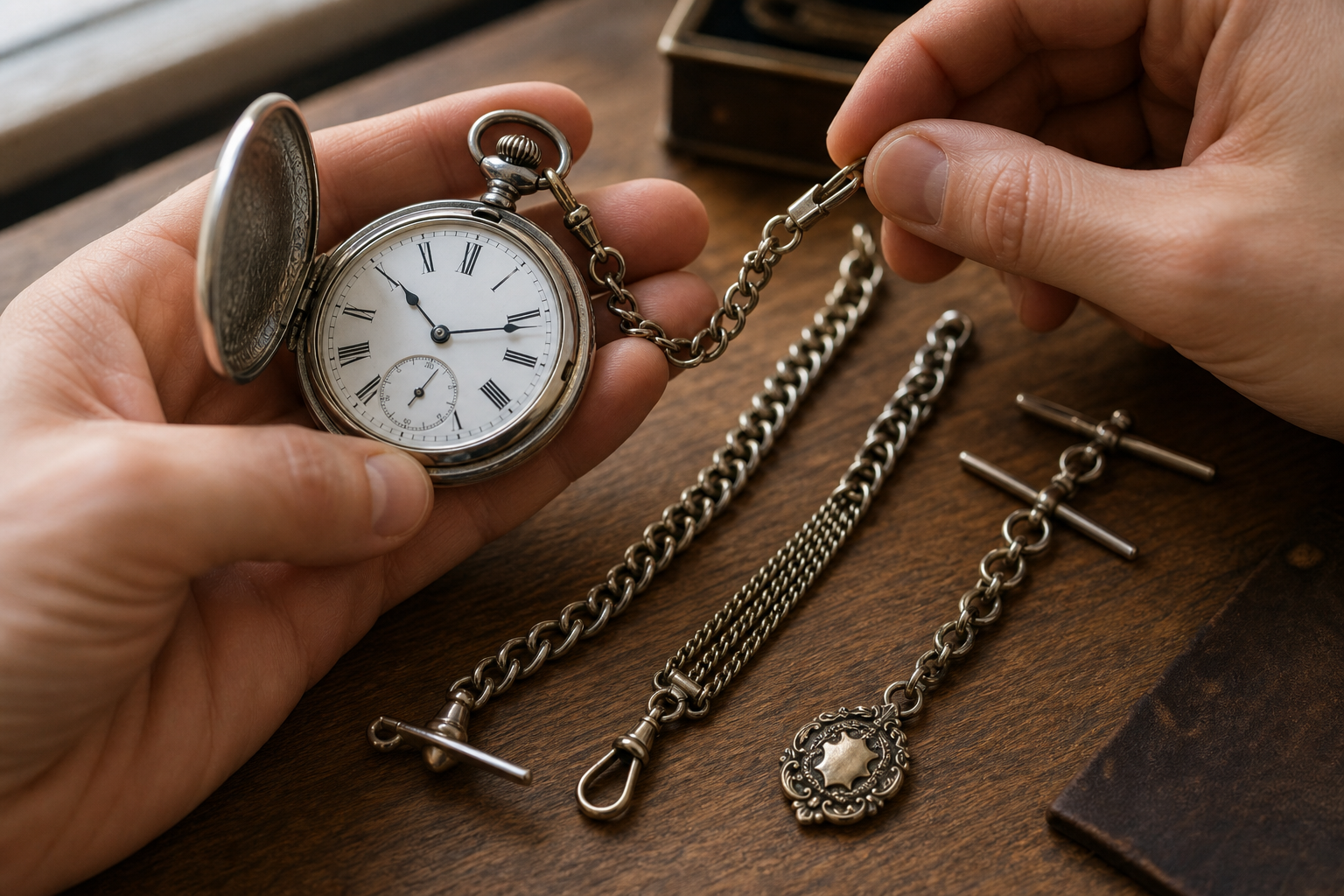
Length trips up more buyers than any other factor. A rough way to get it right: measure from the buttonhole or belt loop you intend to use out to wherever the watch pocket actually sits, then add roughly 3 to 5 centimetres of slack so the chain doesn’t sit pulled taut like a tightrope across your midsection. Too much length and it sags and swings with every step; too little and you’ll be pinching and tugging just to get the watch free.
Clasp choice matters almost as much. Spring rings are adequate for lighter chains that don’t see heavy daily use. Lobster clasps are sturdier and can be operated with one hand, which counts for a lot if you’re checking the time constantly throughout the day. Swivel hooks let the watch spin freely on the chain, which stops the whole assembly from slowly twisting itself into knots over a week of wear.
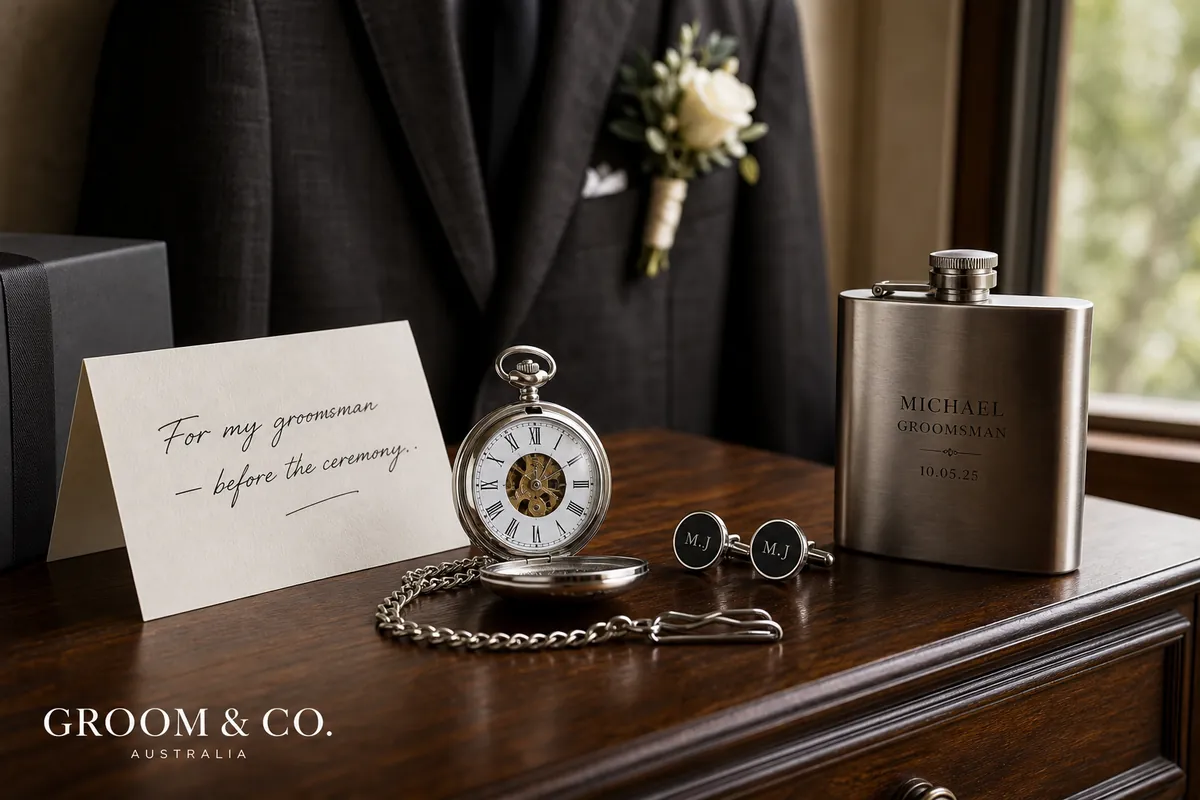
If the watch is going to someone else, think about personalisation before length or clasp type even enters the conversation. A good number of engravable pocket watches come with a fob or clasp that takes initials or a short date, turning an otherwise standard chain into something the recipient keeps for decades rather than months — a detail that lands particularly well for a best man’s gift or a retirement send-off.
Budget shouldn’t be an afterthought either, but cheapest isn’t always most sensible. A solidly made stainless steel or brass chain will outlast a thin gold-plated one that starts flaking within a year of normal wear, so weigh durability against sticker price rather than picking on price alone. If you want something that looks considerably more expensive than it costs, it’s worth a look through the clearance section before paying full retail — chains and complete watches both cycle through there on a rolling basis, and the discount doesn’t come at the expense of build quality.
Advice That Actually Holds Up
Anyone who’s spent real time behind a watch counter will tell you the same thing: try the chain against the actual outfit you’re going to wear it with, not on its own under shop lighting. A Double Albert that looks striking draped over a bare mannequin can read completely differently once it’s sitting against a patterned waistcoat or fighting for attention with a busy tie.
Keep it clean. Pocket lint and skin oils settle into chain links faster than most people expect, and curb-link styles are particularly prone to trapping grime in their flat, interlocking surfaces. A quick wipe with a soft cloth every handful of wears keeps brass and bronze chains looking crisp instead of dull, and it’s far less effort than a proper deep clean once tarnish has set in.
Buying for a groomsman or best man specifically? Lean slightly heavier than you would for your own everyday piece. Wedding photography is unforgiving toward anything too delicate, and a Double Albert or a solid curb chain holds up in group shots in a way that a fine, thin fob chain simply vanishes against a dark waistcoat.
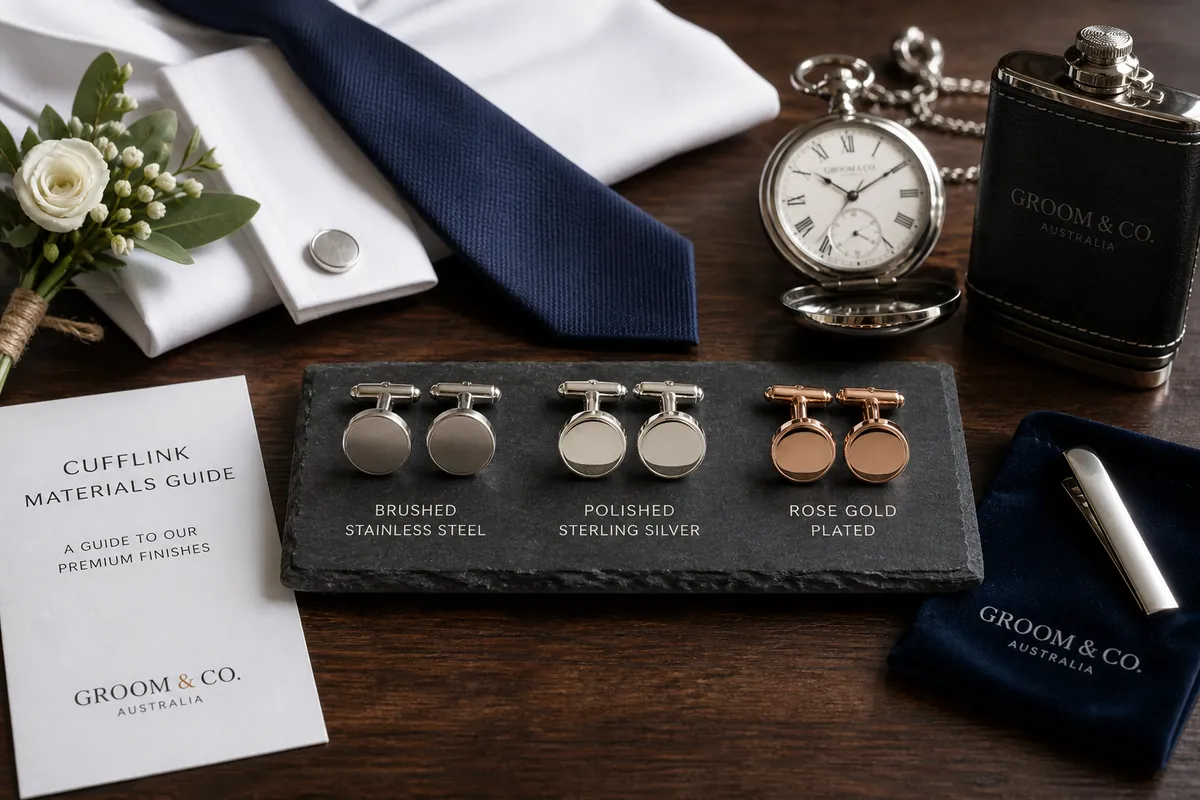
It’s also worth thinking past the chain on its own. Cufflinks, tie bars, and other accessories finished in the same metal tone tie an outfit together far more convincingly than expecting one chain to carry the whole look by itself.
Frequently Asked Questions
Which pocket watch chain type should I pick?
It depends entirely on how you’ll wear the watch. A single Albert is the reliable, all-purpose option for waistcoat wear, a Double Albert suits occasions where a bit more presence is welcome, and a plain fob chain is the most practical choice for belt-loop or everyday carry.
How do I figure out which chain suits my setup?
Start with the attachment point — waistcoat buttonhole, belt loop, or uniform pocket — and let that dictate length and clasp style. From there, match the chain’s metal finish to your watch case so the two don’t clash.
What should I actually check before buying one?
Clasp quality first, since that’s usually where cheaper chains fail. After that, confirm the length suits your build, check the metal tone against your case, and consider whether the finish will hold up to how often you plan to wear it.
Is there a cheaper option that still looks good?
Brass and steel chains cost noticeably less than solid gold and stand up just as well to daily handling. The clearance range is also worth checking regularly, since well-made chains and watches move through there at reduced prices without any compromise on quality.