
Cufflink Materials Guide: Stainless Steel, Brass or Enamel for the Wedding Party
Why Cufflink Materials Actually Matter
Most blokes shopping for groomsmen gifts treat cufflinks as an afterthought, something to tick off the list alongside the ties and the pocket squares. Then the wedding photos come back six weeks later and everyone can see, close up, whether the cufflinks look like jewellery or like something that fell out of a cereal box. The material is the whole story here. It decides the weight, the shine, how it photographs under harsh reception lighting, and whether it survives being shoved in a jacket pocket during the reception dance floor chaos.
Stainless steel, brass and vitreous enamel are the three materials you’ll run into constantly when you’re browsing cufflinks for a wedding party, and they behave very differently once they leave the box. Steel is the workhorse. Brass is the character piece. Enamel is the colour-matcher. None of them is objectively “best” — it depends on how many groomsmen you’ve got, what your budget looks like, and whether these cufflinks need to survive a second wear at next year’s races or a mate’s wedding.
There’s also a practical reason this matters more for a wedding party than for a single gift: you’re usually buying five, six, sometimes eight sets at once, all needing to match or at least coordinate. A material that photographs beautifully as a single hero shot on a product page can look inconsistent across eight different hands if the finish varies between units, which happens more with hand-applied enamel than with a stamped steel piece.
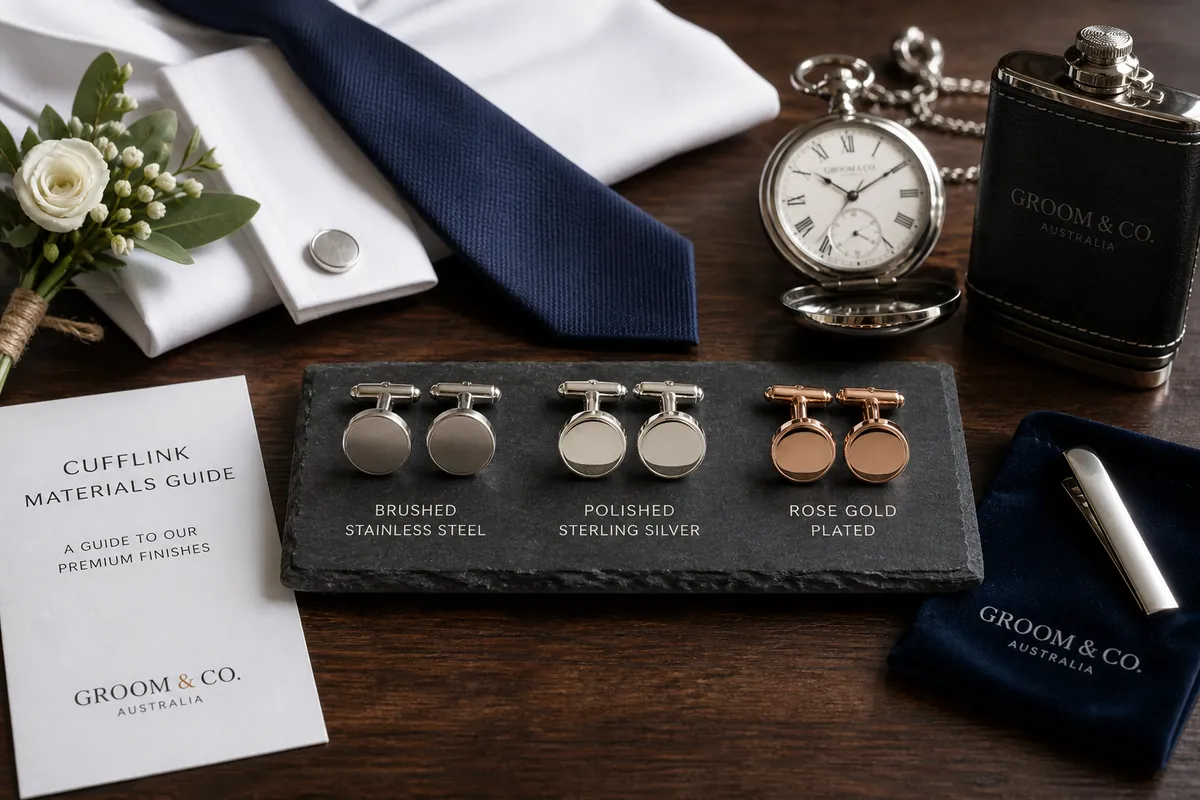
If you’re building out a full groomsmen kit rather than just cufflinks on their own, it’s worth browsing the wider accessories range at the same time, because tie bars, lapel pins and cufflinks in mismatched finishes are one of the more common styling mistakes we see in wedding photos. Silver-tone steel next to a warm brass tie bar reads as sloppy, not eclectic.
Choosing the Right Cufflink Material
Start with the suit, not the cufflink. Charcoal and navy suits, which cover roughly eight out of ten Australian weddings, sit best with cool-toned metals: polished stainless steel or rhodium-plated pieces. Warmer suit tones, tan, olive, or the increasingly popular sage-green groomsmen looks, pair better with brass or antique gold finishes. This one decision alone will steer you toward or away from an entire material category before you’ve even looked at price.
Next, think about who’s actually wearing them. A groom who wears french cuffs three times a year needs something that photographs well and feels special, so enamel detail or a brass finish with some personality earns its place. Eight groomsmen who will realistically wear these once, maybe twice, need something that survives being handled by people who’ve never used a cufflink in their life and will absolutely bend the toggle backwards trying to figure it out. That’s a durability argument for stainless steel every time.
Budget matters too, and it compounds fast once you’re buying for a full bridal party. Steel cufflinks are typically the most cost-effective per unit, which is why they dominate bulk groomsmen orders. If you need to stretch a tighter budget across more people, it’s worth checking the clearance range before assuming premium enamel pieces are out of reach, since end-of-run stock often includes genuinely nice finishes at a fraction of the original price.
Finally, consider whether you want engraving. Steel takes laser engraving cleanly and holds up over decades, which is why it’s the standard choice when a groom wants to gift something with names, dates or initials. Brass engraves well too but the finish can wear slightly at the engraved edges over years of handling. Enamel generally isn’t engraved directly, since the coloured surface would be marked, so if personalisation is the priority, lean steel or brass rather than enamel-forward designs. According to bridal planning resources like Wikipedia’s overview of cufflink history and construction, engraved metal cufflinks have been a personalised gift tradition since well before the wedding industry existed as we know it, which tells you this isn’t a fad, it’s a genuinely durable gifting category.
Top Cufflink Styles and Materials
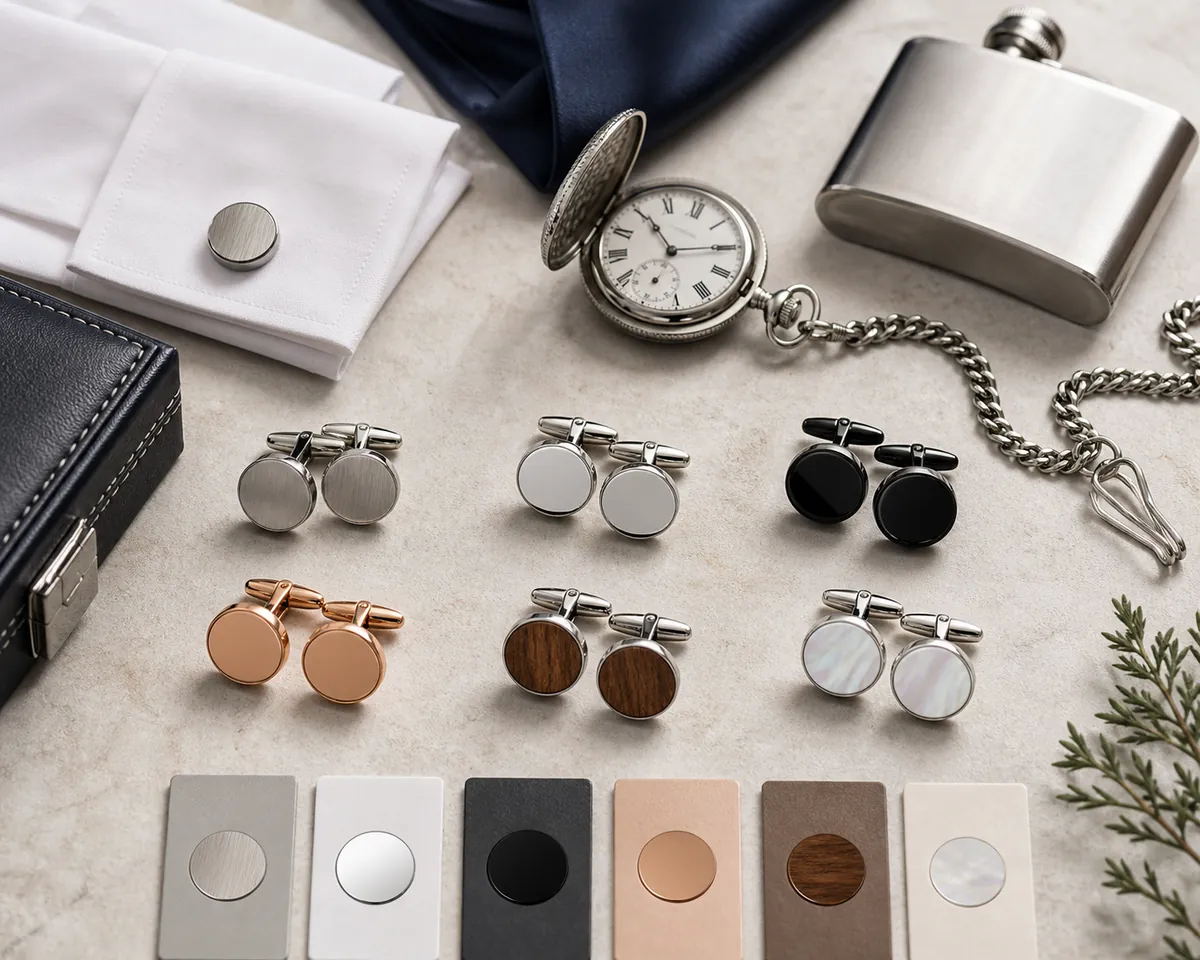
Stainless steel is the material you’ll see most across groomsmen ranges, and for good reason. It doesn’t tarnish, it doesn’t need polishing before the ceremony, and it resists the kind of scratching that happens when eight men are getting dressed in one hotel room with limited mirror space. Steel also takes a mirror-polish or a brushed matte finish equally well, so you can match it to whatever hardware is already in the groom’s wardrobe. Stainless steel’s corrosion resistance comes from its chromium content, which forms a thin protective oxide layer on the surface, and that’s exactly why it holds up so well through a long reception without any visible wear.
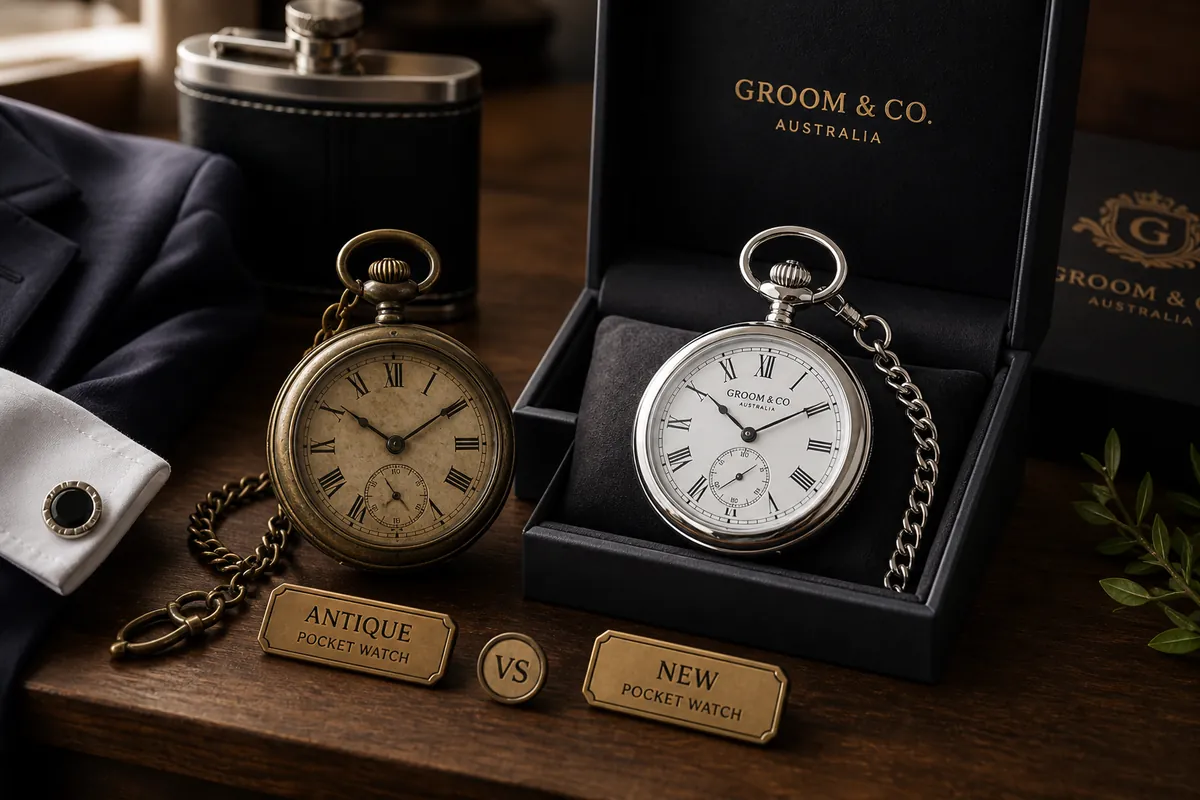
Brass is the vintage-leaning choice. It has a warmer, more antique tone straight out of the box, which suits rustic, barn, or heritage-venue weddings particularly well. The trade-off is that brass is an alloy of copper and zinc, and copper reacts with air and skin oils over time, so it can develop a light patina if it’s not stored properly between wears. That patina actually looks great on some pieces, giving them character, but it’s worth knowing before you commit eight sets to a groomsman who’ll toss them in a gym bag afterwards. If brass is calling to you for the wedding-day look, it’s worth pairing it with something like the brass pocket watches in the same finish family, so the groomsman’s whole kit reads as one considered set rather than mismatched pieces bought separately.
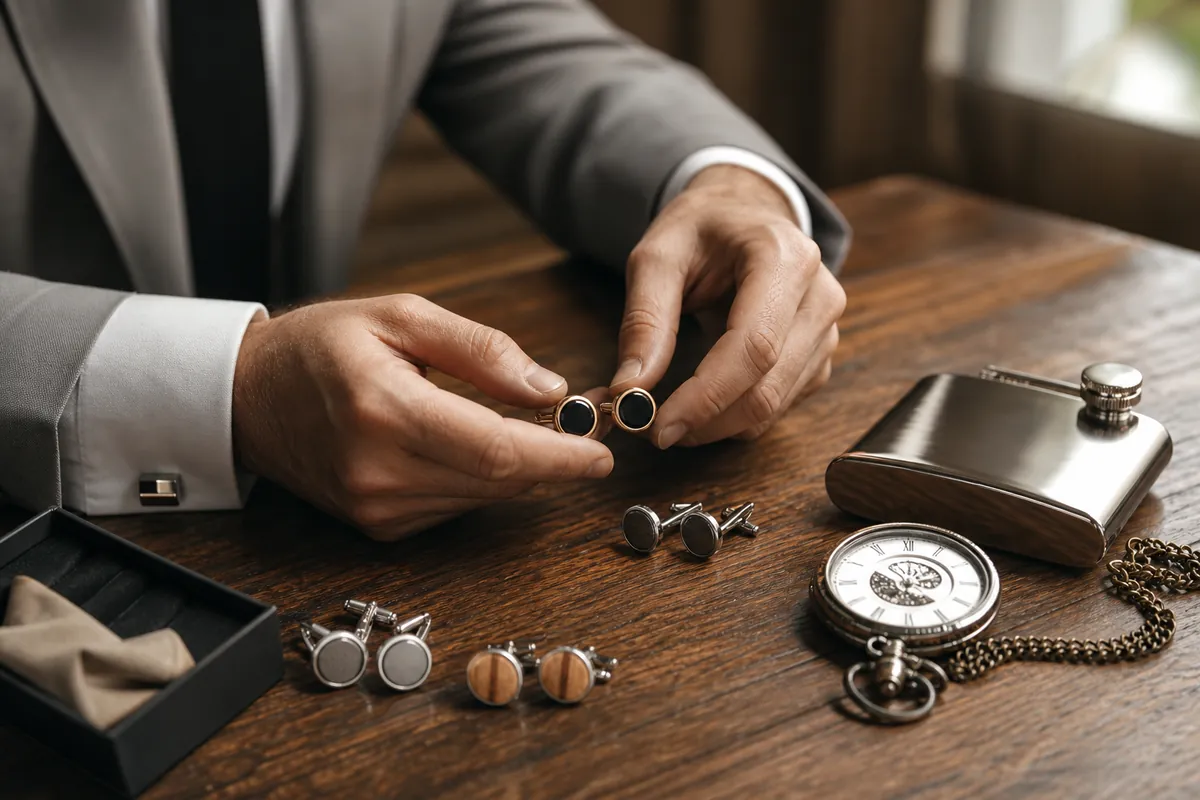
Vitreous enamel is where colour comes in, and it’s the material most groomsmen actually get excited about because it’s the one that can carry a wedding’s colour palette directly. Enamel is essentially powdered glass fused to metal at high temperature, which is why the colour is genuinely permanent rather than a painted or dyed surface that will fade. The catch is that enamel is harder than the base metal but more brittle, so a hard knock against a tiled bathroom floor is more likely to chip an enamel piece than dent a solid steel one. For a wedding where the palette really matters (navy and gold, burgundy and cream, that sort of thing), enamel accents on a steel or brass base give you the best of both: colour-matching plus the underlying durability.
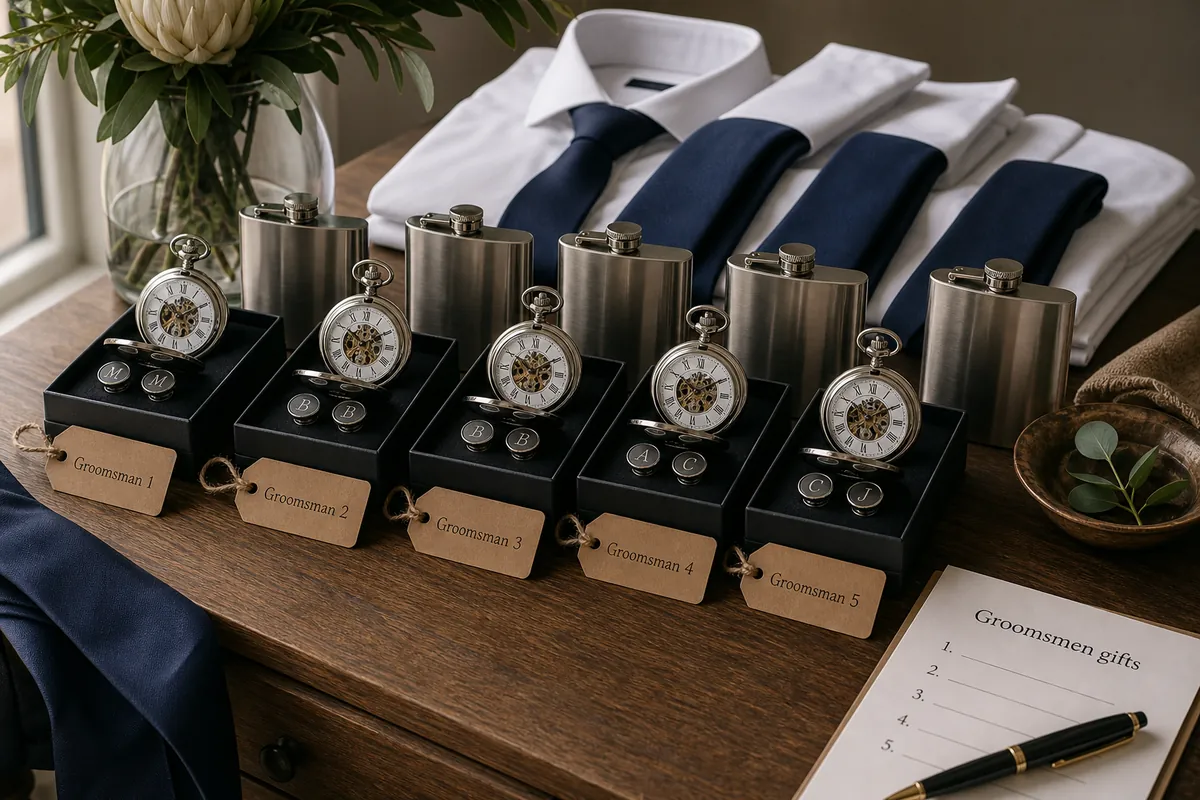
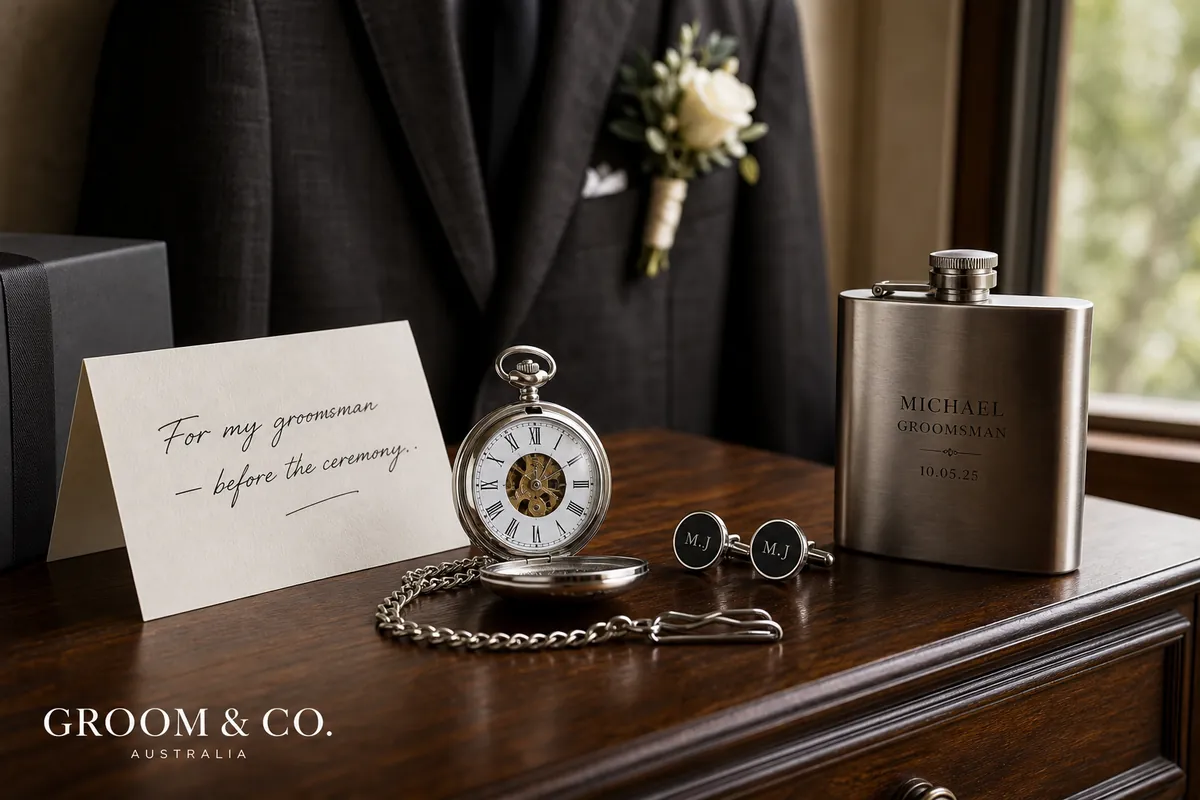
If you’re still deciding on the wider theme, it’s genuinely worth looking at how coordinating pieces come together. Groomsmen kits that include a pocket watch alongside the cufflinks tend to photograph better as a set, because the eye reads matching metal tones as intentional styling rather than a grab-bag of separate gifts bought on different days.
What to Check Before You Buy
Check the toggle or bullet-back mechanism before you commit to a bulk order, not after. This is the part that actually fails, not the cufflink face. Cheap toggles loosen after a handful of uses and start falling out mid-reception, which is exactly the kind of thing nobody notices until the photos show a groomsman’s cuff flapping open in the background of the first dance. A solid, slightly stiff toggle action when new is a good sign; it’ll ease with use rather than starting loose and getting worse.
Weight is a genuinely underrated signal of quality. Pick up a pair and feel them in your palm. Solid stainless steel and solid brass both have real heft to them. A suspiciously light cufflink, even one with a convincing enamel finish, is often hollow underneath or plated over a cheaper base metal, and plating wears through at the edges within a year or two of handling.
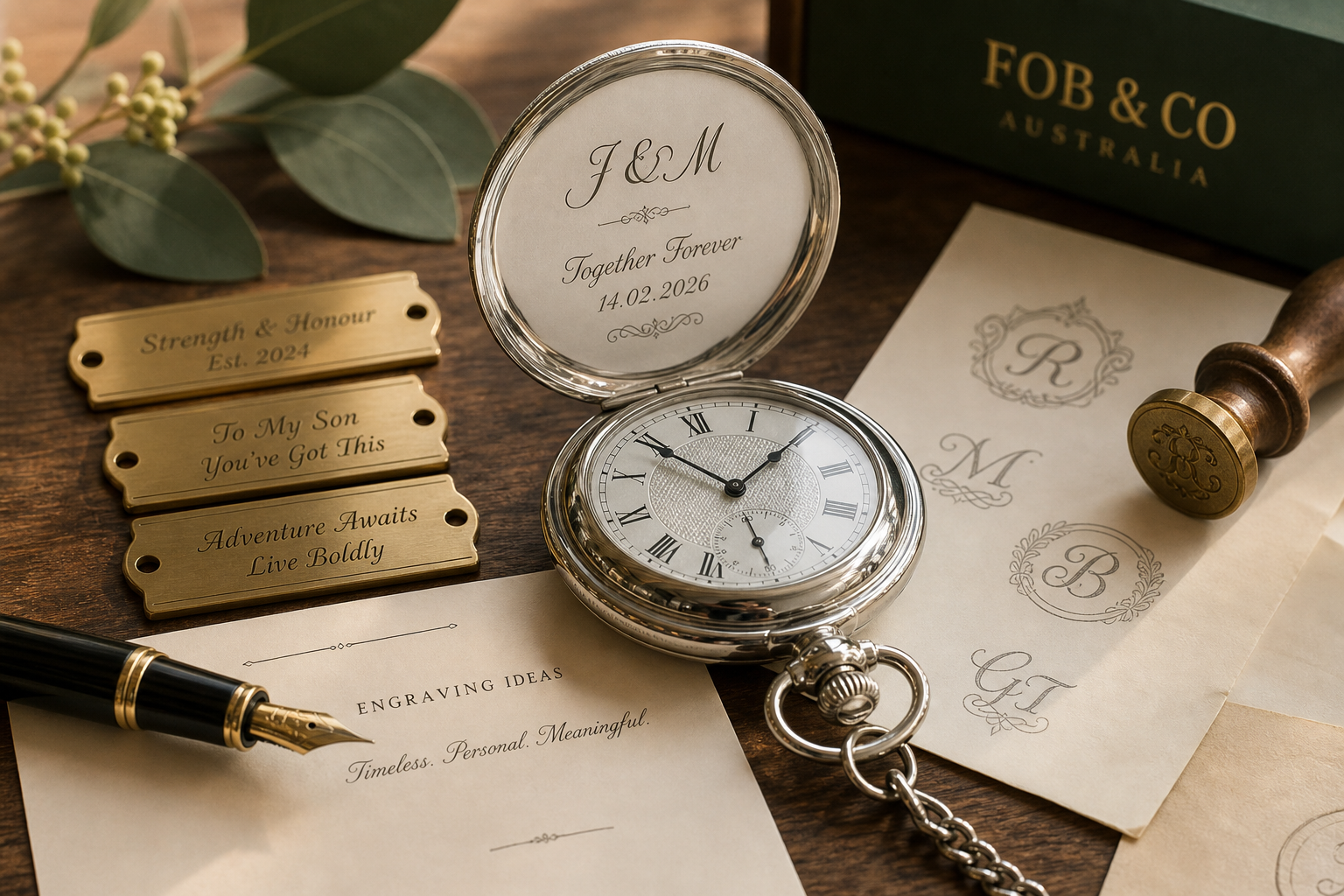
Think about engraving lead time if you want names, initials or a wedding date on the pieces. Engraved orders for a full wedding party take longer to turn around than off-the-shelf sets, so if personalisation matters, start that conversation with your supplier weeks out, not days. The engravable pocket watch range is a useful reference point for lead times even if you’re buying cufflinks specifically, since engraving turnaround tends to be similar across metal accessory categories.
Lastly, think about who’s paying and who’s keeping them. If the groom is gifting cufflinks to the groomsmen as a thank-you, budget-friendly steel across the board with one nicer set for the best man is a common and completely reasonable split. If it’s a “buy once, wear at every formal event for the next decade” purchase for the groom himself, spending more on a genuinely solid brass or enamel piece makes more sense, because the cost per wear drops fast over ten years of black-tie events.
Tips From the Experts
Jewellers who deal with wedding parties every season will tell you the same three things, more or less word for word. First: buy a spare pair or two beyond the head count. Someone always loses one on the day, usually the best man, usually during the reception, and having a spare in the getaway car saves a genuinely stressful ten minutes of searching a venue car park in a hired suit.
Second: store them properly between the engagement, the buck’s do, and the wedding itself. A small box or pouch per groomsman, labelled with names if you’re organising eight sets at once, prevents the scratching that happens when loose metal pieces rattle around together in a drawer for three months.
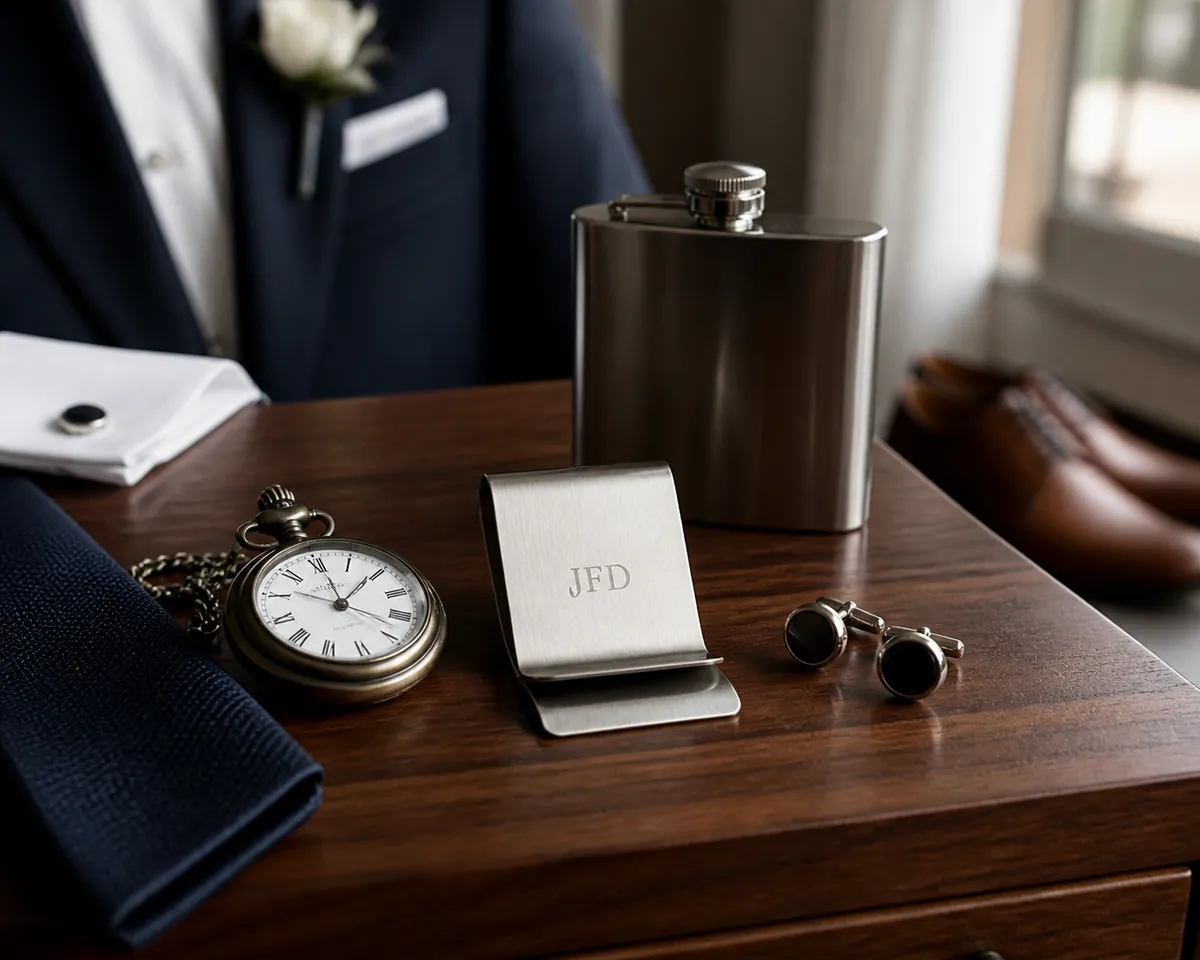
Third, and this one surprises people: match the cufflink finish to the watch, belt buckle and shoe hardware the groomsman is already planning to wear, not just to the suit colour. Mixed metals across small details is the single most common styling slip in wedding photography, more common than mismatched tie widths or the wrong pocket square fold. If a groomsman already owns a silver watch, steel cufflinks are the safer call over brass, regardless of what colour palette the wedding is running.
One more thing worth knowing: the father of the groom often gets left out of the accessories conversation entirely, with all the attention going to the groomsmen line-up. A small, considered piece from the dad pocket watches collection, in a finish that echoes the groomsmen’s cufflinks, is a detail that gets noticed and appreciated far more than its price tag would suggest.
Frequently Asked Questions
Frequently Asked Questions
What is the best cufflink material for a wedding party?
Stainless steel is the most practical choice for a full wedding party because it’s durable, affordable in bulk, and doesn’t need any special care between the buck’s do and the ceremony. If budget allows for a step up, brass or enamel accent pieces add character for the groom or best man while the rest of the party stays in steel.
How do I know which cufflink material is right for me?
Match the cufflink tone to the suit colour and to any existing watch or belt hardware the wearer already owns, since mixed metal tones are the most common styling mistake in wedding photos. Cool suits like navy and charcoal suit steel, while warmer or rustic-themed weddings suit brass.
What should I look for when buying cufflinks?
Check the toggle mechanism for a firm, solid action, since a loose toggle is the most common failure point, not the cufflink face itself. Also check the weight in your hand, as a genuinely solid piece feels heavier than a hollow or thinly plated one, and confirm engraving lead times early if you want names or dates added.
Are there budget-friendly cufflink options for groomsmen?
Yes, stainless steel sets are the most affordable option to buy across a full wedding party without sacrificing durability. It’s also worth checking clearance stock before assuming a nicer finish is out of budget, since end-of-run pieces often carry a genuine discount on materials that would otherwise cost significantly more.