
How to Clean a Hip Flask: Care Guide for Groomsmen Gifts
TL;DR: To clean a hip flask, rinse it with warm water and a drop of dish soap after every use, swirl a one-part white vinegar to three-parts water mix through it for odours, rinse again, then let it air-dry with the cap off. Never use a dishwasher, and never store spirits in it for weeks.
In This Article:
A hip flask is one of those gifts that can last for decades, or end up tarnished and smelly in the back of a drawer after one wedding. The difference is almost always how it was cleaned and stored. This guide covers how to clean a hip flask after each use, how to deal with stubborn smells, how to care for leather-wrapped and wood-finished flasks, and how to fill and store one so it stays in good shape. If you are buying flasks for the wedding party, our hip flasks for groomsmen are a good place to start, and the care steps below apply to every one of them.
How do you clean a hip flask, step by step?
The routine takes about five minutes and should happen every time the flask has been used, ideally the same night or the next morning. Spirits are not the problem on their own. What causes trouble is residue and moisture left sitting inside a sealed container for days.
- Empty it completely. Pour out any spirit that is left. A flask is designed to carry a drink for an evening, not to store it.
- Rinse with warm water. Fill the flask about a third full with warm (not boiling) water, cap it, shake it for twenty seconds and pour it out. Repeat twice.
- Add a drop of dish soap if needed. One small drop is enough. More than that is hard to rinse out through a narrow neck and can leave a soapy taste.
- Rinse until the water runs clear. Keep rinsing until there are no bubbles and no smell of soap.
- Clean the cap and thread. Wash the cap separately and wipe the thread with a soft cloth. Residue in the thread is a common source of stale smells.
- Air-dry with the cap off. Stand the flask upside down on a rack or tea towel for several hours, then leave it upright with the cap off until it is completely dry inside.
The last step matters most. Capping a flask while it is still damp inside traps moisture, and that is behind most of the musty smells and dull patches people complain about. Food safety bodies give the same advice for any reusable drink container: clean it, then dry it properly before you store it (Food Standards Australia New Zealand).
How do you clean each flask material?
Most hip flasks have a stainless steel body. Some are wrapped in leather, finished with a wood panel, or coated in a colour or plated finish. The inside is cleaned the same way every time. What changes is how gently you treat the outside.
| Finish | Inside | Outside | Avoid |
|---|---|---|---|
| Plain or brushed stainless steel | Warm water, a drop of dish soap, vinegar rinse for odours | Soft damp cloth, dry straight away | Steel wool, bleach, dishwasher |
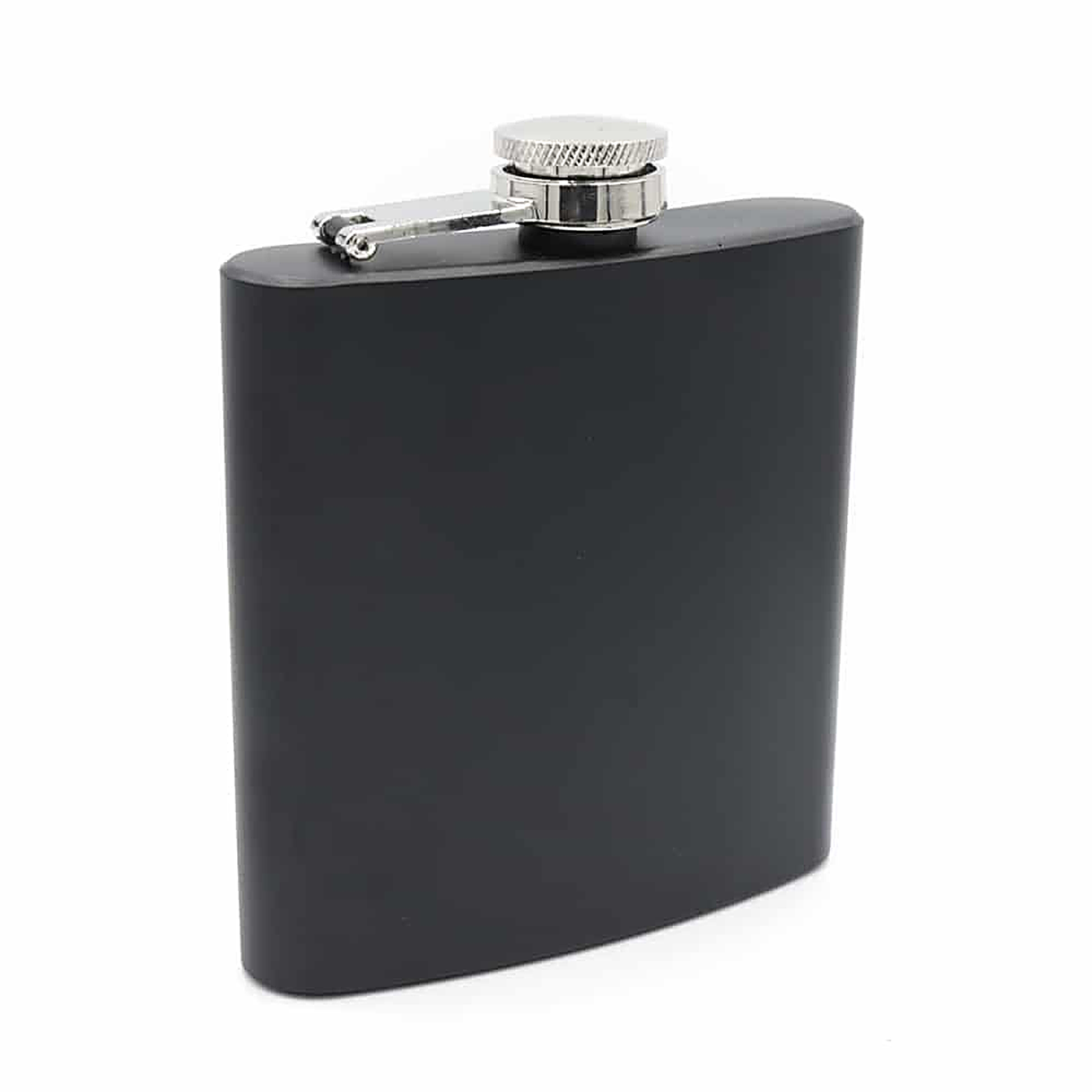
| Matte black or coloured coating | Same as stainless steel | Soft cloth only, no polish | Abrasive pads and scouring creams |
| Gold, rose gold or brass tone | Same as stainless steel | Soft microfibre cloth, light pressure | Metal polish, rubbing against keys and coins |
| Leather or fabric wrapped | Same as stainless steel, keep water off the wrap | Dry cloth; leather conditioner every few months | Soaking, long periods in direct sun |
| Wood panel | Same as stainless steel, keep water off the wood | Dry cloth | Soaking, heat, the dishwasher |
Stainless steel resists corrosion because of a thin chromium-rich layer on its surface that repairs itself in the presence of oxygen (worldstainless). That is why harsh scrubbing and bleach are a bad idea: they damage the finish without making the flask any cleaner. Warm water, mild soap and time to dry are all it needs.
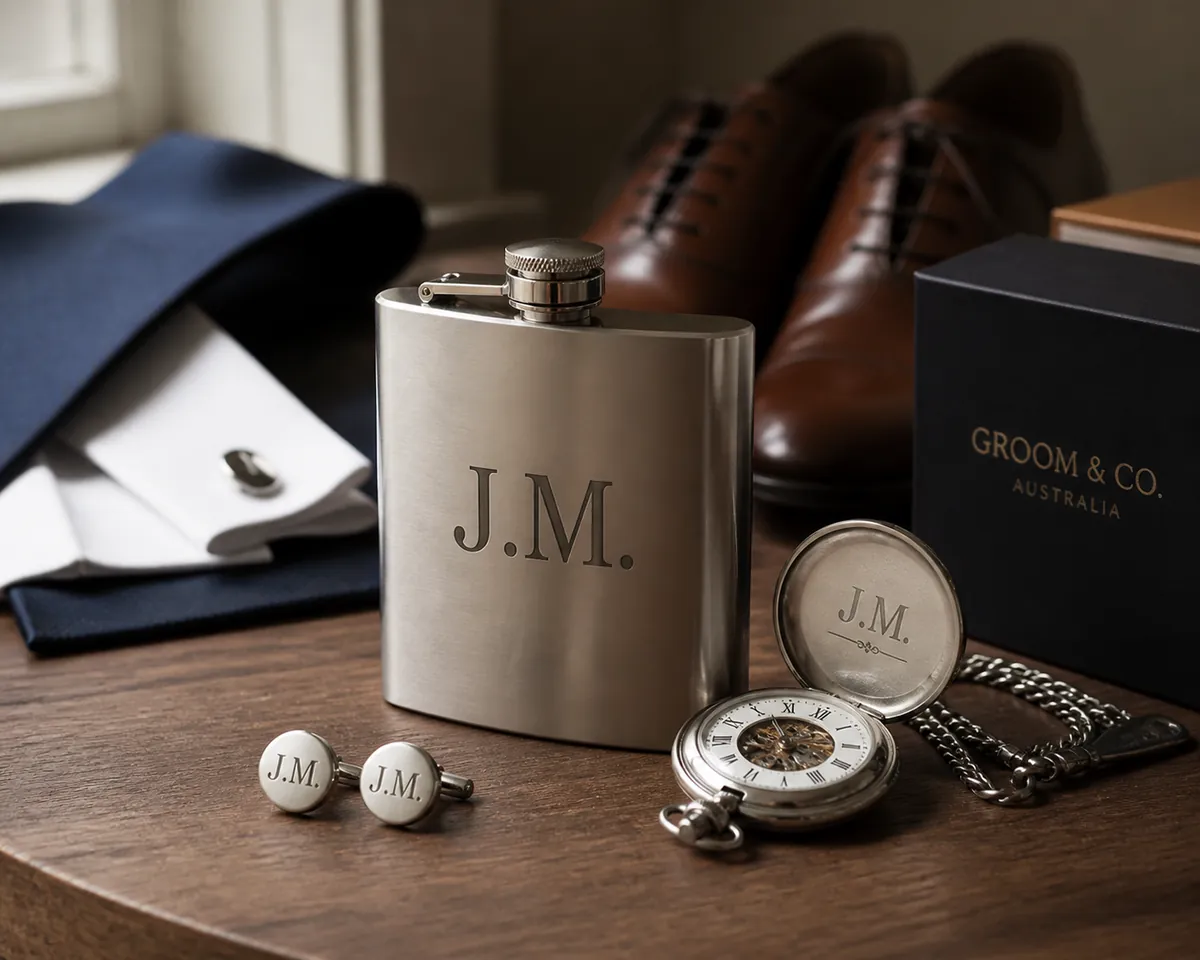
Engraved flasks need one extra precaution. Do not scrub across the engraving with a stiff brush, because the recessed lettering picks up residue and can look patchy. Use a soft cloth in small circles. If you are planning engraving for the wedding party, our guide to hip flask engraving ideas covers wording and placement.
How do you get a smell out of a hip flask?
A stale or sour smell usually means something sat inside the flask for too long, or the flask was capped while wet. Most cases clear up with one of these methods, used in this order:
- Vinegar rinse. Mix one part white vinegar with three parts warm water. Fill the flask about a third full, cap it, shake for a minute and let it stand for ten minutes. Pour it out and rinse with clean water at least three times.
- Bicarb soda. If vinegar does not shift it, dissolve a teaspoon of bicarbonate of soda in warm water, swirl it through the flask, leave it for fifteen minutes and rinse thoroughly.
- Uncooked rice. For residue stuck to the inner walls, add a tablespoon of uncooked rice with a little warm water and shake hard. The rice works as a gentle scrubber where a brush cannot reach. Rinse until no grains are left.
- Long air-dry. Finish any of these with a full day of drying with the cap off. A lingering smell after cleaning is often just trapped moisture.
Never use bleach or oven cleaner inside a flask. Both are hard to rinse fully out of a narrow neck, and neither should end up in something you drink from.
Prevention is easier than the cure. Fill a flask with straight spirits only. Sugary liqueurs, cream liqueurs and anything with citrus cling to the inner walls and turn sour much faster than plain whisky, rum or brandy.
How do you fill a hip flask without spilling?
Use a small funnel. Pouring straight from a bottle into a narrow neck almost always spills. Fill the flask over a sink, leave a little space at the top so the cap seats properly, and wipe the thread dry before you screw the cap on.
Check the seal by turning the flask upside down over the sink for a few seconds. If it drips, tighten the cap and check that the thread is dry and free of residue. A leaking flask in a suit jacket on the wedding day is a problem nobody wants.
It is also worth knowing how much the flask actually holds. A 6oz flask holds about 177 ml, which is several standard drinks of spirits, so it is a top-up for the evening rather than a night’s supply. Australian health guidance explains what counts as a standard drink and recommends limits for healthy adults (healthdirect; DrinkWise). Our guide to hip flask sizes compares the common capacities side by side.
How should you store a hip flask between uses?
Store it clean, dry and empty. If it is going in a drawer for a few months, rest the cap loosely on the neck rather than screwing it down tight. That lets air circulate and stops the inside smelling stale when you next use it.
Keep the flask away from direct sun and heat, especially if it has a leather wrap or wood panel. Sunlight fades and stiffens leather, and heat can loosen adhesives on wrapped finishes. A gift box or a soft pouch protects plated and coloured finishes from scratches. If the flask came in a presentation box, that box is the best place for it.
Do not carry the flask in the same pocket as keys or coins. Constant rubbing wears through plated and coloured finishes faster than anything else, and it is the main reason a gold-tone flask starts to look tired.
Before each use after storage, give the flask a quick warm-water rinse. Even a clean flask picks up dust and a slightly stale smell after months in a drawer.
Which flasks are easiest to look after?
If the flask is a gift for someone who will actually use it, choose a finish that suits how they live:
- Low-maintenance: a plain or matte stainless steel flask, such as the Matte Black 6oz Hip Flask or the Hammered 6oz Hip Flask. The textured and matte finishes hide everyday marks.
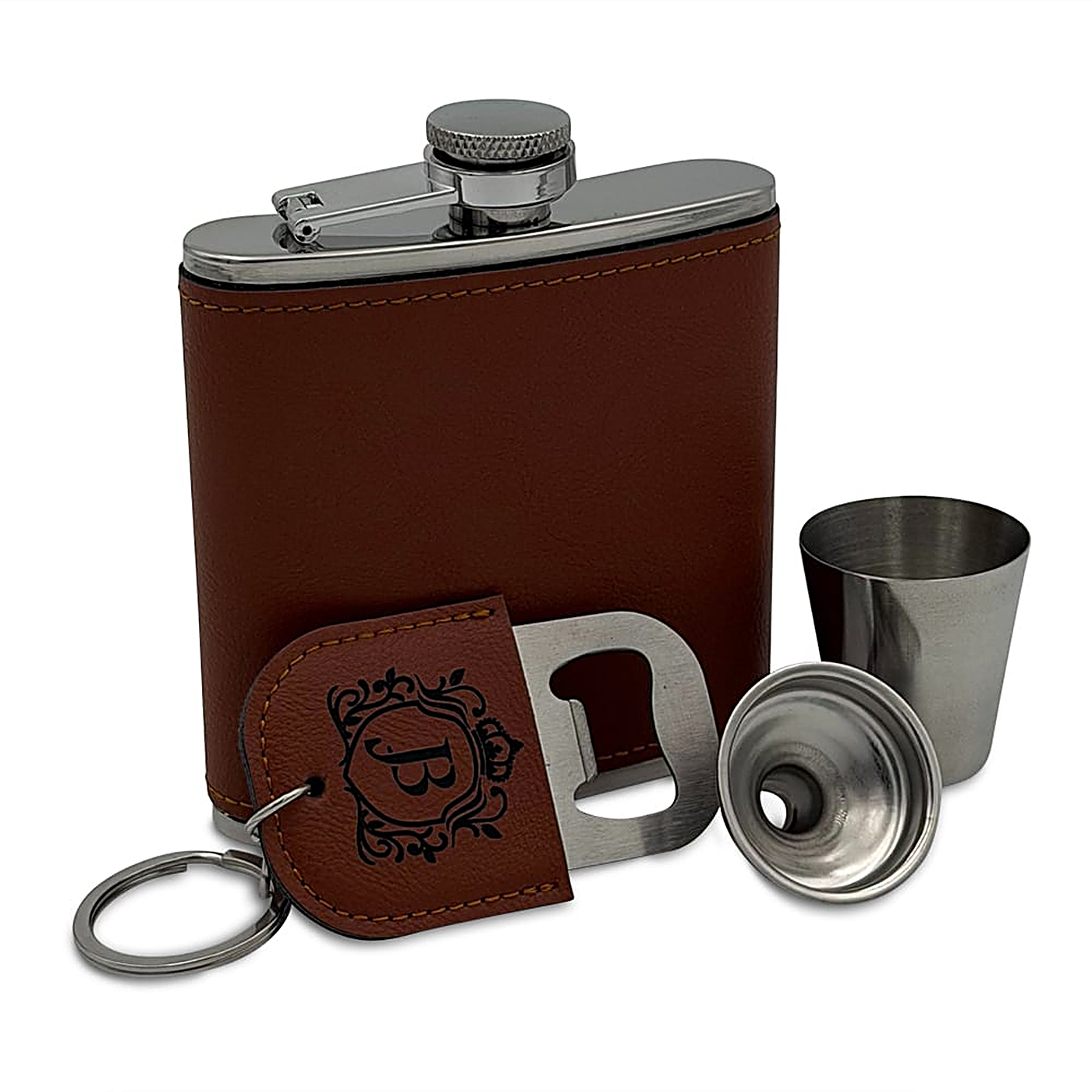
- Classic look, a little more care: a leather-wrapped flask such as the Leather Hip Flask Gift Set. Keep the wrap dry and condition it occasionally.
- Presentation pieces: a boxed set such as the Premium Mahogany Hip Flask Box Set, where the box doubles as storage between uses.
- Small and pocketable: a 1oz keyring flask such as the Silver Keyring 1oz Hip Flask. These are harder to clean inside because of the tiny neck, so a thorough warm-water rinse and a long air-dry matter even more.
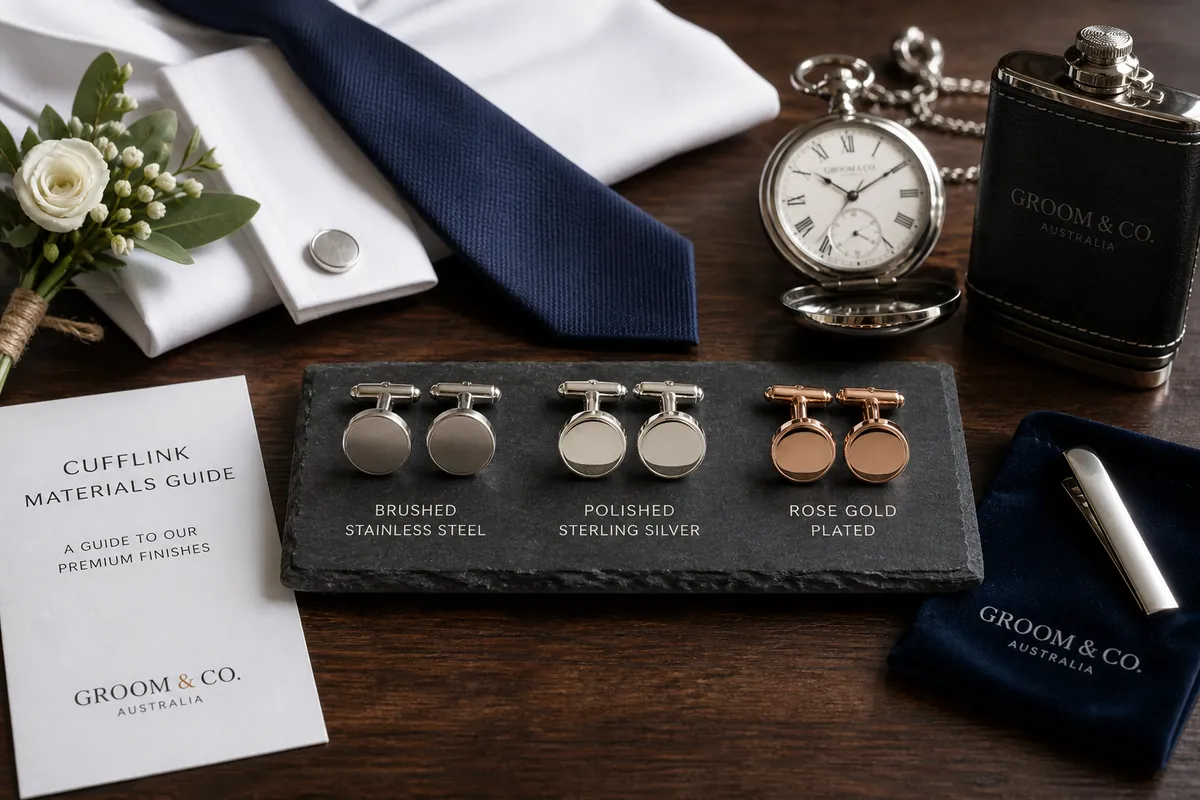
Many groomsmen gifts pair a flask with another keepsake. Our cufflinks and groomsmen accessories sit well alongside a flask in a gift box, and our engravable pocket watches are a lasting option for the best man or father of the groom. For when and how to use a flask on the day itself, read our guide to hip flask etiquette at Australian weddings. You can browse everything at Groom & Co.
FAQ
Can you put a hip flask in the dishwasher?
No. Dishwasher heat and detergent can damage coatings, plated finishes, leather wraps and wood panels, and the spray rarely reaches inside a narrow neck. Hand wash with warm water and a drop of dish soap, then air-dry with the cap off.
How often should you clean a hip flask?
Clean it after every use, ideally the same night or the next morning. A quick warm-water rinse and a full air-dry stops residue and smells building up. Give it a vinegar rinse every few uses or whenever you notice an odour.
How long can you keep alcohol in a hip flask?
Treat a flask as a carry container for a day or an evening, not as storage. Empty it after the event and clean it. Spirits left sitting for weeks can pick up a metallic taste and leave residue that is hard to remove.
What is the best way to dry the inside of a hip flask?
Stand it upside down on a rack or tea towel for a few hours to drain, then leave it upright with the cap off until it is completely dry. Do not cap it while any moisture is left inside.
How do you clean a leather-wrapped hip flask?
Clean the inside the same way as any flask, but keep water off the leather. Wipe the wrap with a dry cloth, let it dry away from heat and sun, and use a leather conditioner every few months to stop it cracking.