
Fob Watches as Wedding Gifts: Styles, History and Presentation
The Complete Guide to Fob Watches
What a fob watch actually is


A fob watch is built to attach to fabric rather than strap around a wrist. Instead of a band, it uses a clip, pin, or short chain that fastens to a pocket, lapel, or waistcoat. That single design choice changes how the watch behaves in daily life: it stays out of the way during hands-on work, it doesn’t catch on gloves or cuffs, and it can be checked with a quick glance down rather than a twist of the wrist.
Nurses and other healthcare staff have kept the format alive for decades because a wristwatch isn’t practical when you’re washing your hands dozens of times a shift. But the same qualities that make a fob watch useful on a ward also make it a natural fit for formal menswear. A groom standing at the altar, a best man delivering a speech, or a groomsman who wants a keepsake that isn’t just another wristwatch — all of them are drawn to the same trait: the fob watch sits quietly on the outfit until it’s needed.
There’s also a sentimental layer that a plain accessory doesn’t carry. Because the format has stayed largely unchanged for well over a century, giving or wearing one connects the owner to something with real lineage, not a trend that will look dated in five years.
Worth a browse before you commit to a style: the Groom & Co homepage, the full pocket watch range, and our blog, which walks through use cases and presentation options side by side. The about us page is a fast way to get a feel for the brand before you narrow things down.
On the practical side, readability and low fuss are what make a timepiece genuinely useful on a working shift — a principle that carries over neatly into formalwear, where you don’t want to be fumbling with a dial mid-ceremony.
Where the tradition came from
Before wristwatches became standard, men carried time in a pocket, and the fob — the strap, ribbon, or short chain used to retrieve the watch and stop it slipping into the lining — is where the whole category gets its name. Pocket watches needed that fob to be practical; over time, some versions dropped the pocket altogether and clipped straight onto clothing, which is essentially the fob watch as it’s known today.
That lineage matters because it separates a fob watch from newer accessories dressed up to look old. This isn’t retro styling borrowed from an era nobody remembers — it’s a format that solved a real problem and never really went away. Uniformed professions kept it in daily use long after wristwatches took over everywhere else, which is part of why it still reads as credible rather than costume-y.
For a groomsman gift specifically, that history does some of the work for you. A fob watch doesn’t need an explanation the way a novelty item might. It signals restraint and a nod to tradition, which suits a wedding far better than something flashier.
The practical role hasn’t disappeared either. Anyone who wants a physical, glanceable readout of time — rather than pulling out a phone — still gets that from a fob watch, minus the bulk a full pocket watch adds to a jacket.
To see how the format has been adapted for modern wear, have a look through the pocket watch chain range, then check our blog for more on the history and how it plays out in current designs. The homepage is a good starting point if you’d rather browse broadly first.
For further reading on how classic timepieces hold their place in modern style, GQ and Vogue both cover why heritage design keeps resurfacing in menswear.
Styles, materials and finishes
Not every fob watch is built the same way, and the differences matter more than they might seem. A plain, minimal face with clear numerals is the safest option if the watch needs to work in a professional setting or double as an everyday accessory — it reads clearly at a glance and won’t look out of place against a uniform. For a gift or a statement piece, a more detailed case, an engraved back, or a slightly ornate dial gives it more personality.
Finish changes the mood of the whole piece. Silver-tone cases are neutral and pair with almost any outfit, which makes them a low-risk pick for a groomsman who’ll wear it once and keep it for years. Gold-tone finishes lean warmer and more traditional, often suiting a groom’s own watch rather than the wider party. Matte or brushed finishes sit somewhere in between — understated, slightly modern, and less prone to showing fingerprints during a long reception.
The attachment itself deserves as much thought as the dial. A sturdy clip holds firm through a full day of movement — useful for a best man who’ll be on his feet giving speeches and shaking hands. A pin or chain-and-loop setup can feel more classic but asks a little more care in how it’s fastened. If the watch is going to see regular wear rather than a single occasion, favour the attachment that’s harder to knock loose.
Presentation is its own category of decision. A watch bought purely for functional, daily use doesn’t need much beyond a sturdy case. A watch bought as a groomsman gift benefits enormously from a proper box, a card, or engraving, because the unboxing moment is part of what makes the gift land.
It’s also worth noting the overlap with pocket watches. If the chain-and-fob look appeals but carrying a watch in a pocket all day feels impractical, a fob watch delivers the same aesthetic while staying clipped to the outside of an outfit.
To compare finishes and case styles directly, run through the pocket watch range and our blog. The about us page is a useful check if you want the style choice to match how the brand presents itself.
For wider style context, Esquire and Harper’s Bazaar both cover how small, considered details keep classic accessories from feeling stale.
Wearing one well
The rule for wearing a fob watch is the same in a hospital corridor or a wedding reception: it should be visible, secure, and quick to check without drawing attention to itself. In a work setting, that usually means clipping it to a breast pocket at a height where a downward glance is all it takes. Nothing about the way it’s worn should slow anyone down.
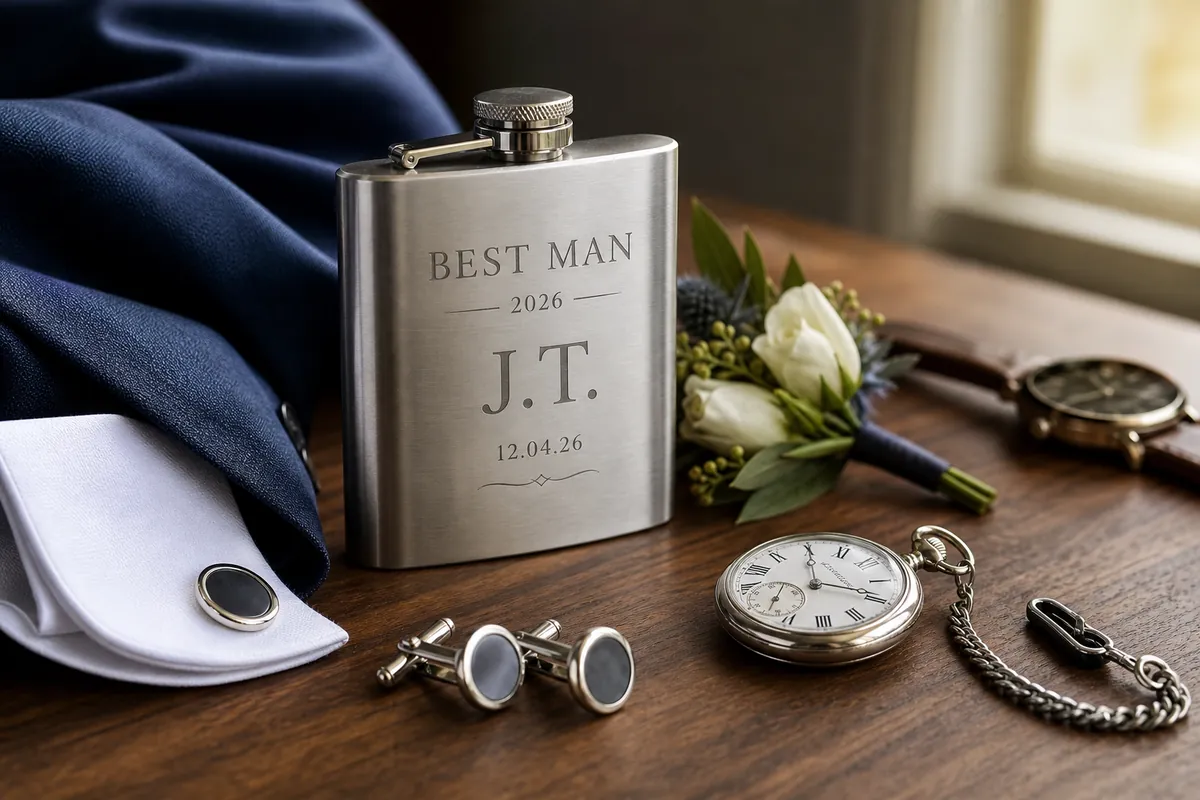
For a groom or groomsman, there’s more freedom to make it part of the outfit. Clipped to a waistcoat pocket, looped through a buttonhole, or pinned to a lapel, a fob watch reads as a deliberate styling choice rather than a purely functional one. Paired with cufflinks or a tie bar in a matching tone, it becomes part of the overall look rather than an accessory tacked on at the last minute.
Fit and security matter more than people expect. A clip that’s slightly loose will shift throughout the day, and a chain that’s too long can catch on furniture or a jacket button during a first dance. Testing the attachment before the day itself — not just trying it on once in a shop — avoids a fidgety habit forming right when photos are being taken.
The chain or clip is worth treating as part of the styling decision, not an afterthought. A watch with a flimsy attachment undercuts the polish of the piece, no matter how good the dial looks. Spend a little more attention here and the whole accessory reads as considered rather than rushed.
For more on pairing a fob watch with formalwear, browse our blog and the pocket watch chain range. The homepage is a quick way to see the full range if you’re still deciding.
On styling classic accessories into an outfit rather than around it, GQ and Martha Stewart Weddings both cover how the best pieces integrate with what someone is already wearing.
A short buying checklist
Start with who’s wearing it and why. A fob watch destined for a work shift needs to be legible and durable above everything else. One bought as a groomsman gift can lean harder into presentation, since it will likely be worn a handful of times a year rather than daily. A personal piece sits somewhere between the two, balancing practicality with a bit more design flourish.
Price matters less than fit for purpose. A mid-range watch that’s genuinely easy to read and comfortable to attach will outlast a cheaper one that feels awkward on the pocket or is hard to check quickly. That’s true whether it’s for personal use or a gift — a slightly higher price tag is easy to justify if the watch actually gets worn.
Legibility deserves a close look before buying, not after. A dial crowded with sub-registers or tiny numerals looks impressive in a product photo but is frustrating to read in practice, especially outdoors or under dim reception lighting. Simpler dials with strong contrast between hands and face tend to age better and stay useful longer.
Upkeep is minimal but not zero. Most fob watches don’t need much beyond keeping them away from moisture and storing them somewhere they won’t get scratched against other jewellery. That low-maintenance nature is part of the appeal — it’s an accessory that rewards being worn rather than one that demands constant attention.
Run through the pocket watch range for a side-by-side look at what’s practical versus what’s decorative, and our blog for more detail on matching a watch to its use. The about us page is a fast way to check the brand fits what you’re after.
For gift-specific guidance, Brides and The Knot both make the case that a thoughtful, well-matched gift beats an expensive but generic one.
Advice worth keeping
Most accessory experts land on the same few points about classic timepieces. The right piece fits the life of the person wearing it, not just the occasion it was bought for. Function should shape the design, not the other way around. And presentation — the box, the card, the way it’s handed over — carries real weight, especially as a gift.
Matching the design to the setting is worth repeating: simplicity for work, more character for a gift, and a blend of both for something bought purely for personal wear. Getting that balance right is usually more important than any single feature on the watch itself.
Restrained, classic shapes tend to age better than anything chasing a current trend. A fob watch that looks sharp today is far more likely to still look sharp in a decade, because the format was never really tied to a passing style in the first place.
What makes the category worth paying attention to is that it manages to be useful and meaningful at the same time. Few accessories pull off both. That dual role is exactly why a fob watch works so well as a groomsman gift — it isn’t a token item that gets shelved after the wedding, it’s something with an actual job to do.
Before deciding, it’s worth comparing a few options across our blog and the pocket watch chain range. The about us page rounds out the picture if you want a sense of the brand behind the range.
For a broader view on why these pieces endure, GQ and Vogue both touch on how classic design earns its keep over time rather than through novelty.
FAQ
Fob watch vs pocket watch: what’s the difference?
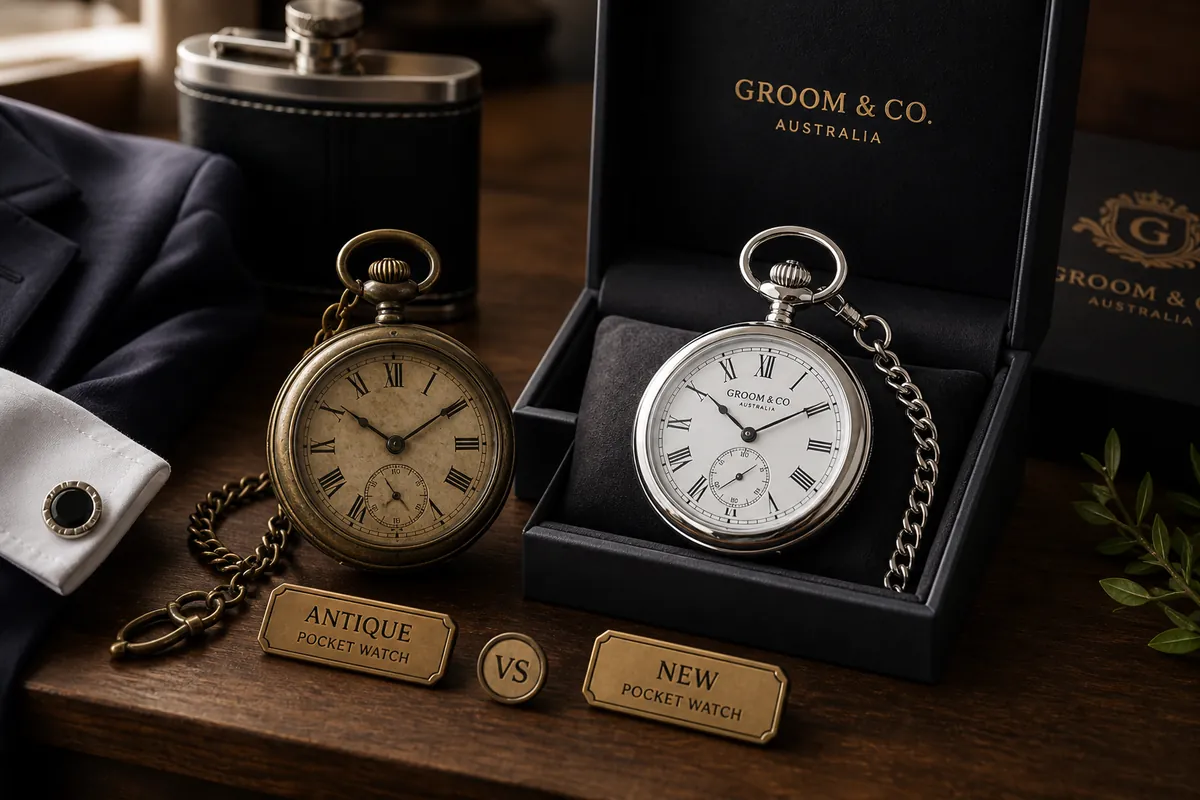
A pocket watch is carried inside a pocket and retrieved on a chain, while a fob watch clips or pins directly to the outside of clothing. The fob watch trades some of the pocket watch’s ceremony for faster, easier access.
Is a fob watch a good groomsman gift?
Yes — it pairs well with formal wedding attire, has genuine history behind it, and unlike many gifts it keeps being useful long after the day itself. Simple, well-made designs tend to work best across a whole groomsman party.
How should a fob watch be attached for a wedding?
Clipping it to a waistcoat pocket or looping it through a buttonhole are the most secure options for a full day of movement. Test the fit ahead of time rather than on the day itself.
Do budget-friendly fob watches still look good?
Yes, provided the design stays simple. A clean dial with a secure clip can look just as polished as a pricier piece, especially once it’s paired with the rest of a formal outfit.