

Wearing a Pocket Watch with Modern Wedding Suits
Pocket Watches for the Modern Groom’s Everyday Style
A pocket watch is one of the few accessories that can sit on a best man’s waistcoat at a Saturday wedding and then ride quietly in a pair of chinos on Monday morning without looking out of place either time. That versatility is exactly why so many Australian grooms and groomsmen are adding one to their kit instead of reaching for another silicone strap. This guide walks through how to choose a piece, how to wear it well beyond the ceremony, and how to keep it running for the next fifty years.
In This Guide
- Why Pocket Watches Are Back in Fashion
- Matching a Pocket Watch to Your Personal Style
- Quartz or Mechanical: Which Movement Suits You
- Chains, Fobs and How to Wear One
- Styling a Pocket Watch for Wedding Day
- Wearing a Pocket Watch on an Ordinary Tuesday
- Making It a Keepsake with Engraving
- Looking After Your Timepiece
- Frequently Asked Questions
- References
Why Pocket Watches Are Back in Fashion
Before wristwatches became standard military issue during the First World War, the pocket watch was simply how a well-dressed man told the time. Pocket watches only lost their dominance once soldiers found wrist-mounted timepieces more practical in the trenches, and the style never fully disappeared from formalwear afterward. That history is precisely what gives the accessory its weight today. It doesn’t read as retro costume; it reads as a nod to a genuine menswear tradition, which is why waistcoat-and-watch combinations keep reappearing at weddings, race days and formal dinners.
For grooms planning an outfit with some personality, or for anyone hunting for a groomsmen gift that isn’t another set of cufflinks, a pocket watch offers something a smartwatch simply can’t: a sense of occasion. It’s an object you present rather than glance at, which makes it a natural fit for a wedding party.
Matching a Pocket Watch to Your Personal Style
The single biggest mistake people make is buying a pocket watch that fights with everything else they own. Before choosing a design, look at the metal finishes already in your wardrobe — belt buckles, cufflinks, wedding bands — and try to stay consistent.
- Classic and ornate: An antique-inspired case with ornamental engraving and a decorative classique pocket watch chain suits a period-style or vintage-themed wedding.
- Clean and modern: A brushed stainless steel case with a plain dial reads as contemporary and pairs easily with a slim-cut suit.
- Understated everyday piece: If you want something you’ll actually carry Monday to Friday, look for a slimmer profile that sits flat in a trouser or waistcoat pocket without printing through the fabric.
Browsing a dedicated pocket watch and fob watch range side by side makes this comparison far easier than scrolling through mixed jewellery listings, since you can weigh case finishes and chain styles against each other directly.
Quartz or Mechanical: Which Movement Suits You
Movement type matters more than most first-time buyers expect. A quartz movement is battery-powered, keeps near-perfect time, and needs almost no attention — a sensible choice if the watch is going into daily rotation or if you’re buying it as a gift for someone who has never owned a mechanical piece before.
A mechanical movement, whether hand-wound or automatic, relies on a mainspring and gear train rather than a battery. The Smithsonian’s National Museum of American History points out that mechanical movements were the standard for centuries and remain prized today precisely because of the visible craftsmanship involved in their construction. (Smithsonian) The trade-off is that mechanical pieces need periodic winding and, every few years, a professional service. If you like the idea of a watch as a small mechanical ritual rather than a purely functional object, that trade-off is usually worth it.
Chains, Fobs and How to Wear One
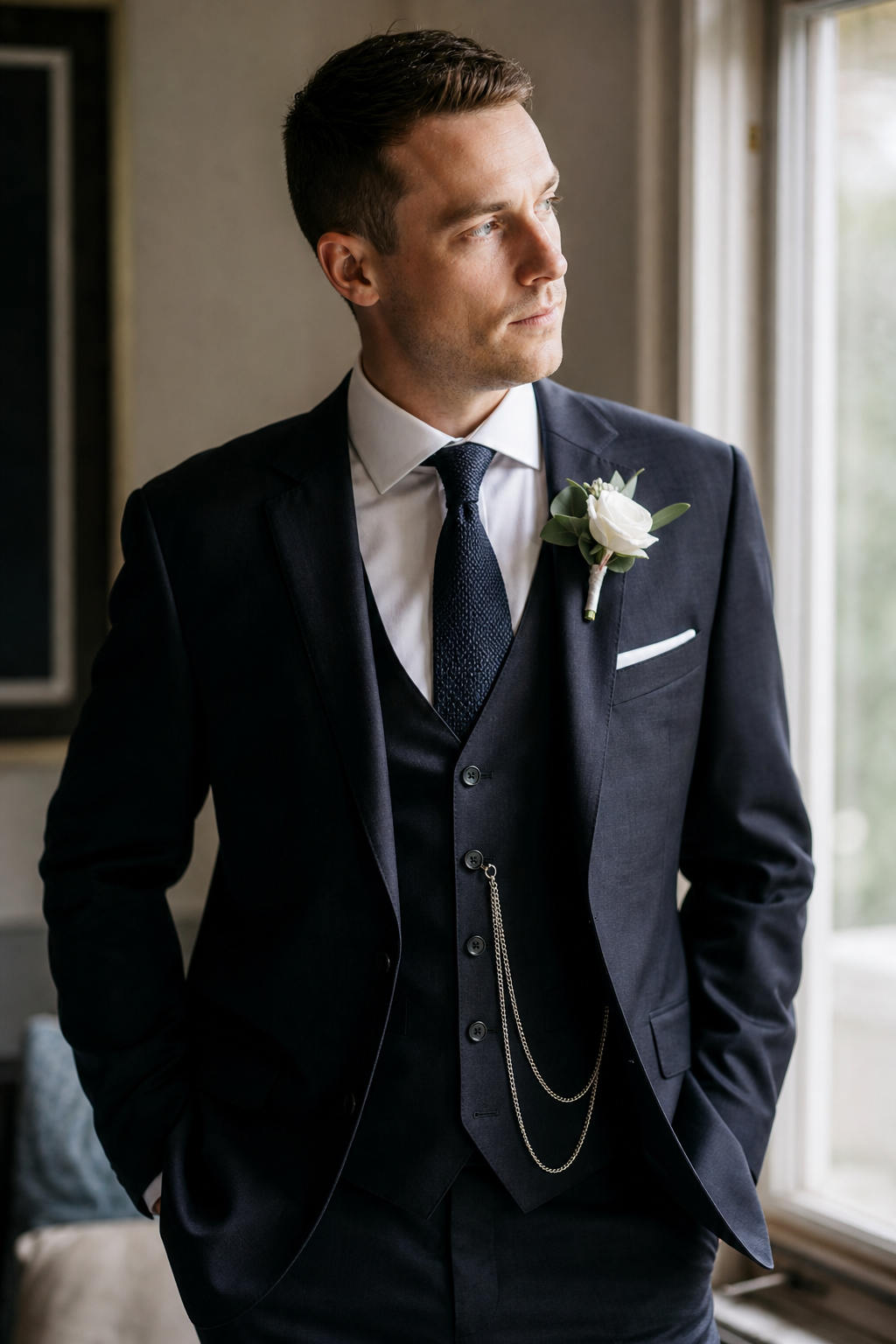
How you attach the watch changes how it reads on the body. A traditional Albert chain, run through a waistcoat buttonhole with the watch in one pocket and a fob or coin counterweight in the other, is the most formal presentation and the one most associated with wedding-day dressing. A shorter chain clipped to a belt loop, with the watch tucked into a trouser pocket, is more casual and works well with jeans or chinos.
Some men skip the chain entirely and have the watch fitted to a leather cord or a heavier necklace chain instead, wearing it as a pendant over a t-shirt or open-collar shirt. It’s a modern reinterpretation that keeps the vintage face on show without needing a waistcoat to anchor it.
Styling a Pocket Watch for Wedding Day
This is where pocket watches earn their keep. A groom in a three-piece suit has an obvious place for the watch — through the waistcoat, chain visible against the fabric — and it photographs beautifully during the getting-ready shots that most wedding photographers now prioritise. Coordinating matching watches across the groom and groomsmen, sourced from the same Groom & Co range, also gives a wedding party a shared detail that ties the whole look together without matching everything down to the socks.
If your groomsmen are wearing two-piece suits without a waistcoat, a shorter chain and belt-loop attachment still works, or the watch can simply live in a breast pocket as a subtle detail that comes out when someone genuinely asks the time.
Wearing a Pocket Watch on an Ordinary Tuesday
Away from weddings, a pocket watch reads as confident rather than costume-y as long as the rest of the outfit is kept simple. A plain shirt, dark denim and a leather jacket give the watch room to be the one point of visual interest. Skip layering it with a lot of other jewellery — a pocket watch already carries enough presence that it doesn’t need competition from stacked rings or heavy bracelets.
Function matters here too. If you’re checking the time in meetings or on the move, a fob watch style with a sturdy clip and a slightly larger, easy-to-read dial will serve you better day to day than a delicate dress piece designed purely for occasion wear.
Making It a Keepsake with Engraving
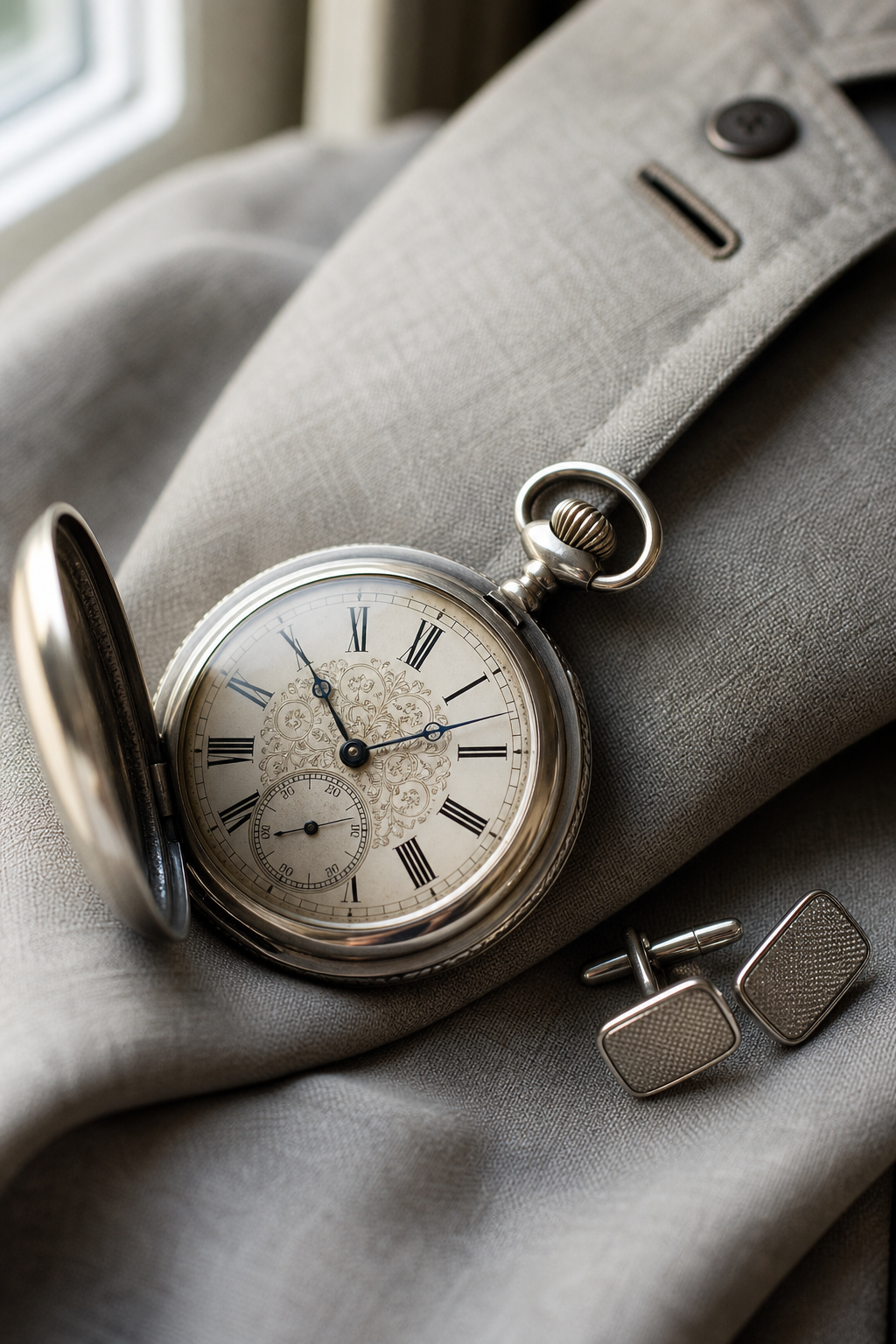
An unengraved pocket watch is a nice accessory. An engraved one is a keepsake, which is exactly why they show up so often on lists of memorable groomsmen gift ideas. A wedding date, a set of initials, or a short line only the recipient will understand turns a manufactured object into something with a story attached. Many grooms choose to engrave the watch’s rear case rather than the dial, keeping the face clean while still leaving a permanent, personal mark on the piece.
If you’re buying for a wedding party, pairing the watch with other personalised gifts — a matching set of engraved cufflinks, for instance — gives each groomsman a cohesive, considered gift rather than a random assortment of items.
Looking After Your Timepiece
Pocket watches are more exposed to knocks and moisture than a wristwatch, since they typically travel loose in a pocket rather than strapped to your body. A few habits keep one running well for decades:
- Wipe the case with a soft, dry cloth after wear to remove pocket lint and skin oils.
- Avoid carrying it alongside keys or coins that can scratch the case or crystal.
- Keep it away from prolonged damp or extreme heat, which can affect both the movement and any leather components on the chain.
- Have a mechanical movement serviced by a qualified watchmaker roughly every three to five years, in line with general horological servicing guidance from industry bodies such as the British Horological Institute. (BHI)
Treat servicing the same way you’d treat servicing a car: it’s cheaper and less disruptive to do it on a schedule than to wait for something to actually stop working.
Frequently Asked Questions
Is a pocket watch still practical, or purely decorative?
Both, depending on the model. A quartz fob watch with a large, legible dial is genuinely practical for daily use. A delicate mechanical dress watch is closer to jewellery and best reserved for formal occasions.
What’s the difference between a pocket watch and a fob watch?
The terms are often used interchangeably, but strictly speaking a fob watch is a compact style designed to clip onto a belt loop or lapel via a short chain, rather than being carried loose in a waistcoat pocket on a longer Albert chain.
Can groomsmen wear pocket watches without a waistcoat?
Yes. A shorter chain attached to a belt loop, with the watch resting in a trouser pocket, works with a standard two-piece suit and doesn’t require a waistcoat to look intentional.
How much should I expect to spend on a good pocket watch?
Quality quartz pieces with a stainless steel case are available at accessible price points, while hand-finished mechanical watches command a premium reflecting the labour involved in their movement. Buying from a dedicated menswear or wedding gifting retailer typically gives a clearer sense of what you’re paying for than a general jewellery marketplace.
Do I need to wind a quartz pocket watch?
No. Quartz movements run on a small battery and only need the battery replaced every couple of years, with no manual winding required.
References
- Wikipedia, “Pocket watch” — en.wikipedia.org
- Smithsonian National Museum of American History, “Pocket Watches” collection notes — americanhistory.si.edu
- British Horological Institute — bhi.co.uk
